Weathering the Winter in East TN

A weatherized home will be healthier, safer and more energy efficient. Here’s why and how to do it.

Every winter, school-aged Tennesseans (and weary teachers) pray for enough snow to cancel school. They have tricks, like flushing an ice cube and sleeping in pjs turned inside-out, in hopes that the snow will stick. Some areas in the mountains have accumulation, but we here in the valley don’t see much; rather, the snow quickly melts upon landing. When school is canceled, usually the danger is from black ice and most lawns are clear by the afternoon, so we don’t have a typical winter filled with snow. The effects of harsh weather can accumulate despite what we see. Keep reading to find out the benefits of and instructions for weatherizing your home. Note: all seasons contribute to the wear and tear of a home and your health.

Tennessee has all four seasons – winter, spring, summer and fall – each with different weather conditions. 

weatherization benefits your health

Weatherization can maintain or improve respiratory health, mental health, physical safety and wellness.  Managing a steady temperature improves indoor air quality and benefits everyone.  Homes that get too cold in the winter or too warm in the summer increase the risk that residents will develop illness and increase the number of visits to the doctor or hospital. Poor indoor air quality or asthma triggers increase the risk of illness, so people with preexisting medical conditions like asthma, emphysema or COPD will likely benefit even more. 

How do I know if my home is weatherized?

If you have to ask, it probably isn’t but here are some ways to know. Do you feel comfortable at home? If you are experiencing unmanageable temperatures, uncomfortable indoor air conditions, or excess moisture in your home, you will likely benefit from weatherization. Some other things to look for are moisture condensed between the glass panels of a window; a furnace that cannot maintain a comfortable indoor temperature; a drafty door or window; a leaky roof.

Air sealing, insulation, moisture control and ventilation are all types of weatherization.  The US Department of Energy (DOE) has recommendations for these four topics:

8 basic ways to keep a healthy home:

  1. Keep it Dry.
  2. Keep it Clean.
  3. Keep it Pest-Free.
  4. Keep it Safe.
  5. Keep it Contaminant-Free.
  6. Keep it Ventilated.
  7. Keep it Maintained.
  8. Keep it Thermally Controlled.

Helpful Do’s and Don’ts

Do: One of the first things you should do is schedule a furnace inspection. Whether you have forced hot air or hot water baseboard/radiators, it’s always a good idea to have your furnace or boiler inspected and serviced before the winter months arrive. When you do so, make sure you are hiring an HVAC professional to do the work. If you have forced hot air heat, this is also a good time to have your ducts cleaned. Stocking up on filters so that you can change them monthly is a good idea. If you have not done so already, consider switching to a programmable thermostat, which can add up to big savings once the cold weather hits.

Don’t: You shouldn’t wait until the first cold night to turn on your furnace. That’s when you will actually need it. It’s best to test it prior to needing it. Also, don’t attempt to service your furnace yourself. If the cold weather has arrived and you will be going away for a short time, don’t turn the heating system off. It’s best to just turn it down to a minimum temperature of 50° or so. That way you will ensure that nothing will freeze while you’re gone.
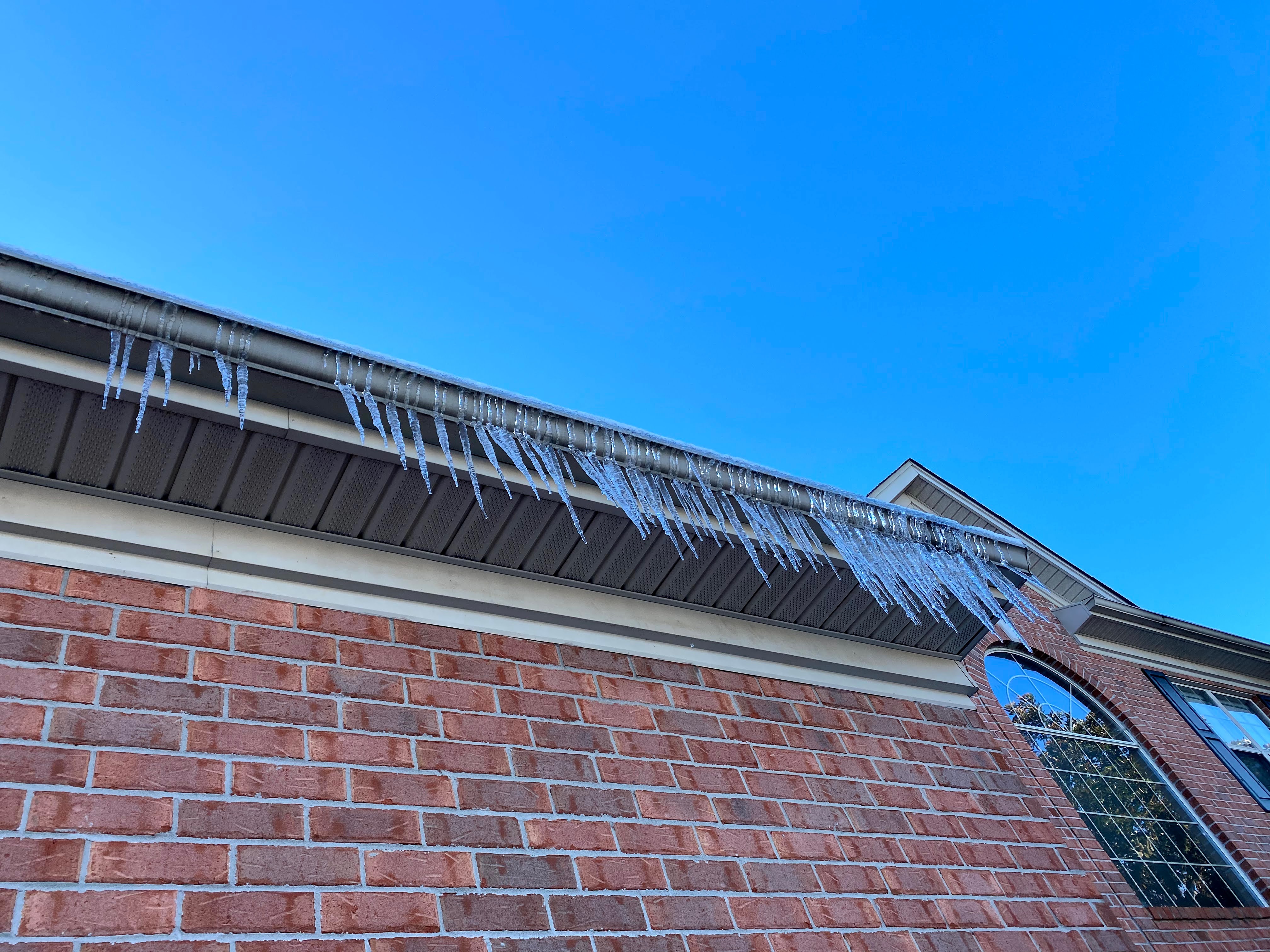
The dangers of winter come in many forms.

Do: Take a walk around the outside of your home. Keep an eye out for cracks in your homes foundation and repair them immediately if found. Also, clean out your gutters and downspouts. This will keep debris from trapping moisture, which can freeze, buildup and damage your gutters, roof and siding.

Don’t: Leaving hoses connected to the outside of the house can cause damage to your plumbing. Make sure that hoses are disconnected and they are drained completely. If you have outside AC units, don’t cover them with plastic as it could cause damage to them over the winter.

Do: Have your chimney inspected and cleaned if necessary. If you don’t have one already, get a cap or screen installed on the top of your chimney to keep out rodents and birds. If you have a fireplace, inspect the damper to make sure it opens and closes properly.

Don’t: Don’t just hire anybody to clean your chimney. Make sure that they are a certified chimney sweep. The Chimney Safety Institute of America (CSIA) has resources available to help you to learn more. Make sure that you do not store your firewood next to the home. This can attract bugs and rodents.

Do: Inspect your windows and doors for gaps. Add weatherstripping and insulation where appropriate. If you have summer screens in your basement windows, replace them with their glass counterparts for the winter.  Check your attic for adequate insulation levels and add more as needed.

Don’t: Be careful not to over-insulate your attic. Often, insulation can be packed too tightly, which reduces its R-value. In addition be careful not to clog the vents at the eaves, reducing airflow and resulting in issues down the road.

[The above text is from Christmas Lumber.]

the benefits of weatherization

According to the Oak Ridge Institute for Science and Education, after a home weatherization residents note additional benefits related to health and finances:

  • Reduced Carbon Monoxide Poisonings
  • Reduced Home Fires
  • Reduced Thermal Stress on Occupants
  • Reduced Asthma-Related Medical Care and Costs
  • Increased Productivity at Work & Home Due to Improvements in Sleep
  • Fewer Missed Days at Work
  • Reduced Use of High Interest, Short-Term Loans
  • Increased Ability to Afford Prescriptions
  • Reduced Need for Food Assistance

assistance with weatherization

Contact your energy provider.  Many utility companies have websites, newsletters and in-home services to help their customers understand energy consumption and weatherization.  Some utilities will even offer an energy audit and provide information for the U.S. Department of Energy Weatherization Assistance Program.

The  weatherization assistance program works to help low income households meet their energy and weatherization needs. Click to the Department of Energy Weatherization Assistance webpage to determine eligibility and learn more.

What is Tennessee Weatherization Assistance Program?


“The Weatherization Assistance Program (WAP) is 100 percent federally funded through a grant from the Federal Department of Energy. The program provides funds to states to assist with the weatherization of the homes of low income elderly and disabled adults and families. The program is administered through contracts with an established network of 19 non-profit agencies and local governments experienced in providing weatherization services. WAP services are available in all 95 counties. Applicants must meet low-income eligibility guidelines based on established Federal poverty guidelines. Activities include: insulation, storm windows, caulking, and other related activities to reduce home energy costs and increase home energy efficiency.” [www.tn.gov]

U.S. Department of Energy
Weatherization Assistance Program (WAP)
www.energy.gov/eere/wipo/weatherization-assistance-program

U.S. Environmental Protection Agency (EPA)
Indoor Air Quality
www.epa.gov/indoor-air-quality-iaq/energy-weatherization-and-indoor-air-quality

Tennessee Valley Authority (TVA)
EnergyRight Solutions
www.tva.gov/Energy/EnergyRightSolutions

Tennessee Housing Development Agency (THDA)
Weatherization
thda.org/business-partners/weatherization

Oak Ridge National Laboratory
Weatherization and Intergovernmental Programs Support
weatherization.ornl.gov

U.S. Department of Energy Weather Assistance Program
Fact Sheet
www.energy.gov/sites/prod/files/2018/06/f52/EERE_WAP_Fact%20Sheet-v2.pdf  

Oak Ridge National Laboratory
Health and Safety Audit Design Manual
weatherization.ornl.gov/wp-content/uploads/pdf/2016_Present/ORNLTM2017-498.pdf


While this information isn’t directly related to Tennessee insurance, the tips and benefits to be gained from weatherization will surely help in the areas of life, health, home and even auto. Now, to apply what I’ve learned and not procrastinate checking on these things until tomorrow…or next summer. Or next winter. Time moves quickly.

Batteries not Included: And Neither is Insurance

Why Protecting your Toys this Spring and Summer is Essential

Your Homeowners policy does cover personal property, but what is kept in the home, and not for the full amount it would cost to replace or repair the item in case of an accident or loss. (See the difference between Actual Cash Value and Replacement Cost.) Consider what you own that is not covered by your Homeowners policy and protect those expensive toys from damage that is almost inevitable.

Spring has sprung! Bradford Pear trees have bloomed and boating in East Tennessee is starting to pick up. Like those trees, a day on the water is beautiful, but can be stinky if the wind shifts and an accident happens. If you know, you know.

So, what does personal property include?

The contents of your home are your personal property. This includes furniture, appliances and clothing. Not all personal property is covered. Items more appropriately covered under different forms of insurance may have limited or no coverage for loss. These items include, but are not limited to, money, jewelry and firearms.

“Insurance agents and brokers should work with clients to find a valuable articles policy that offers worldwide protection with no deductible, automatic coverage for new items, and an agreed value feature with a market value enhancement. In the event of a covered total loss, clients will get 100% of the agreed value as a cash settlement, and if the market value of the item has increased, clients may benefit from inflation protection up to 150% of the itemized value, up to the policy limit.”

Laura Doyle, excerpt from the Insurance Journal magazine, August 2020

  • Property damage liability—Property damage liability insurance covers the cost of damages to someone else’s property after an accident you cause. In most cases, your property damage will pay out when you are at fault for an accident that causes damage to someone else’s boat or PWC.
  • Collision damage—When your boat or PWC is damaged in an accident, collision insurance is an optional coverage that pays the cost of repairing or replacing it, minus the amount of your deductible.
  • Bodily injury liability—Bodily injury liability coverage is the part of your insurance policy that pays for the costs associated with injuries to other people involved, if you are found legally responsible for a boating accident.
  • Hull coverage—Hull insurance covers any physical damages that occur to your boat and generally includes trailers, equipment, motors, and accessories. Typical claims include fire and windstorm damage.
  • Fuel spill liability—A separate policy that separates out fuel spill liability and provides coverage for any fines that may occur from an accident involving a fuel spill.

Here are some tips to ensure that you are getting your money’s worth and keeping your costs down:

  • Only buy what you need: There are lots of options out there for marine insurance and many of these policies are custom-written. Ensure that you know what you need so you can avoid paying for features that you don’t require.
  • Agreed value vs. Cash value: In an agreed value policy, you are paid a pre-determined value for the vessel in the event of a total covered loss. With agreed value, the insured and insurer agree on the value of the boat upfront. Most agents would recommend this option for a new or late-model boat. As the boat continues to age, look to potentially switch to a cash value option to save on premiums.
  • Take a boater safety course: Almost all insurers offer a discount for boaters that have recently completed an approved boater safety course. Take an in-person class or get your boat safety certification online. Check with your insurance agent to see if a discount is offered for your specific policy.
  • Spend on safety gear: Insurance companies may cut you an additional discount for having extra safety features onboard your vessel. Check with your insurance agent to see if you qualify for any additional savings.

The 8 Best Boat Insurance Providers of 2021

  • Best for Professional Fishermen: Markel.
  • Best for Affordability: Allstate.
  • Best for Safe Boat Drivers: Progressive.
  • Best for Additional Coverage Options: Foremost.
  • Best for Policy Bundling: Nationwide.
  • Best for Individualized Customer Service: United Marine Underwriters.
  • Best for Emergency Services Coverage: State Farm.

The type of boat, its length, and its expected use will largely dictate your boat insurance rates. Whether you have a speed boat, a small fishing boat, or a yacht will make a big difference in what you pay. In general, boat insurance costs typically range from $200 to $500 per year, on average. The amount of boat insurance you may need depends on a number of factors, including the boat’s value, motor size, and age. Like other vehicles, high-performance boats will likely command a higher level of coverage to compensate for the amount of damage they are able to inflict.

Even though Tennessee does not require boat insurance, it is quite useful in the event of loss from theft, fire, storm damage, and many other threats. One of the most convenient ways of paying for your boat insurance is by bundling it with your current auto or home insurance. You can often save a significant amount of money by doing so and all it takes is one loss to more than pay for the difference.

If you plan on keeping your boat at a marina, it’s likely you will be required to carry boat insurance. A marina with multiple docks is a prime spot for large and small vessels to collide and cause damage.

One great hazard—even if you have a solid boat-insurance policy—is damage caused by other, uninsured boaters. So sometimes having uninsured-boater protection in your policy can be as important as protection from liability damage, especially in a state like Tennessee, where boat insurance is not mandated by law.

An important note: Be sure to ask whether tow insurance is covered by your plan. This aspect of boat insurance is often sold as a separate package, but it may not be required if towing is already covered by your policy.

Also, be sure to know specifically where your insurance covers you. Many people don’t know that boat insurance will only cover you in specified waters, so be aware of drifting into international or coastal waters where your insurance may not cover you.

It’s nearly Memorial Day weekend–the unofficial start of summer–and we can hardly wait. Dust off the ATVs and jet-skis, fill the coolers and gas tanks, make sure life jackets still fit, and update your insurance policy today.

Whatever Floats Your Boat

The more your boat is worth, the more important insurance becomes to protect yourself from financial loss.

You can’t buy happiness. But you can buy a boat and that’s about the same thing.

Too many sources to credit

In East Tennessee, our lakes are usually crowded with teenagers jet-skiing, fishermen fishing, friends sailing, families cruising and debris floating. After the deluge of rain this past spring, boats and skiers are still dodging flotsam and jetsam throughout the river. Most boaters know that sinking feeling when a propeller wrestles with a log, but did you know that boat protection can help cover the cost of repairs? If you have comprehensive insurance or property damage coverage built into your watercraft policy, your boat insurance will cover collision with rocks, logs, and other marine obstacles.


It’s not like I own a yacht, why would I need a watercraft policy?


The amount of boat insurance you need depends on a number of factors, including the boat’s value, motor size, age, and how it’s used. In general, most professionals recommend buying at least $1,000,000 in liability insurance, with boat insurance ranging anywhere from as little as $75 to as much as $500 per year. For uninsured/underinsured motorists coverage, a typical minimum is $10,000 to cover losses in the event someone without insurance is at fault in an incident on the water. The amount you purchase is flexible and should reflect the potential injuries you may incur if you or one of your passengers is seriously hurt, or your vessel is damaged. For example, a brand new high performance speed boat will need more coverage for bodily injury and property damage liability than a low-risk, slow-moving pontoon.

Boater’s insurance typically covers:

  • Collision damage: Covers repairs or replacement in the event that your boat is damaged in an accident.
  • Property damage liability: Should you damage someone else’s boat or property, then this will keep you covered.
  • Bodily injury liability: In the event that you should injure someone while operating your boat, this helps protect your assets.
  • Comprehensive: If your boat is stolen, vandalized, or damaged in a non-collision manner, your comprehensive provides compensation.
Men have a tendency to forget their age on the water and take all sorts of risks.

In the event that your boat’s wake causes damage to another watercraft or capsizes another boat, you would be responsible and could be held liable for damages. Don’t be caught off-guard, take out a boat insurance policy.

So, what does my Homeowner’s policy cover?

A home insurance policy provides limited coverage for your boat or watercraft should it be damaged, stolen or vandalized. In most policies, you would only be reimbursed up to $1,000 worth of coverage if your boat, jet ski or miscellaneous water craft is broken or damaged by the following: fire, wind, explosion, hail, theft, vandalism or falling objects. Since homeowner’s policies can have deductibles either greater than or close to $1,000, most claims would not make sense to file.

When it comes to hail damage, there is a peculiar provision in which the watercraft must be in an enclosed building for the damage to qualify. For example, if a hailstorm causes damage to a boat stored outside, you wouldn’t be able to file a homeowners claim in that case. But if the building or storage enclosure has glass that gets shattered and hail comes through that damages your boat, then you would be covered.

Personal Property

If you have items on your boat that are stolen or destroyed, you can likely use your homeowner’s insurance to recoup those losses. For example, your homeowner’s policy would cover your portable Bose speaker, but high-priced modifications and equipment exclusive to your boat should be covered under a boat insurance policy. Therefore, always carefully review the comprehensive coverage of your policy to determine exactly what is and is not covered. You may need to purchase additional riders, or policy endorsements.

Captains and vessels come in all sizes.

If you injure someone or damage property with your watercraft, the homeowner’s liability policy can help cover any associated cost. These policies come with at least $100,000 in liability coverage you can use for legal expenses or restitution to pay the affected party. There are some important size and horsepower limitations when it comes to boats however. Generally the boat needs to be very small, and in no case will your jet ski be covered. To get more robust coverage for your boat or watercraft you should take out a boat or personal water craft (PWC) insurance policy.

Vessel/Motor TypeWhen is it Covered by Liability Insurance?
Inboard or Inboard-OutdriveLess than 50 HP
OutboardLess than 25 HP
SailboatSmaller than 26 feet
Jet SkisNever
Air boatsNever
From valuepenguin.com

Whether you’re spending every day on the water or have your boat in storage for the winter, it’s important to keep your watercraft protected against the unexpected year-round. Coverage is not required by law, with the exception of Arkansas and Utah, but your lien holder and/or marina where you dock may have requirements. An agent can help answer your questions, but you can also learn about the coverage types below:

  • Watercraft medical payments coverage
    Helps pay medical costs if you or anyone on your boat is injured in an accident.
  • Watercraft liability coverage
    If there’s an accident, this covers the medical and other expenses of whoever was injured as well as the costs of repairing or replacing another person’s boat or property.
  • Property coverage
    Covers the damage to your boat if you’re involved in an accident with another boat or something else, like a pier, buoy, dock or debris. It also typically pays for damage caused by something other than a collision, such as theft, fire or vandalism.
  • Repair cost
    Covers the repair work done on your boat, motor, equipment or trailer with no deduction for depreciation*.
  • Emergency services
    If your boat breaks down, this covers the cost of towing and labor and the cost of delivering fuel, oil or a battery.
  • Uninsured watercraft coverage
    If you’re in an accident with an uninsured boater, this helps pay for injuries that you, your family or anyone else on your boat sustains.
  • Agreed value option
    When you’re reimbursed for your boat’s value, you’ll be reimbursed for what it was worth at the start of the policy regardless of the current market value.
  • Personal effect coverage
    Covers your fishing equipment and other personal belongings if they’re damaged, lost or stolen.
  • Additional boat equipment
    Covers boat accessories, like anchors, life jackets and navigation gear, up to the policy limits.
  • Boat trailer coverage
    Covers damages to your trailer resulting from an accident or other unforeseen incident.
Have fun on the water and be safe out there!