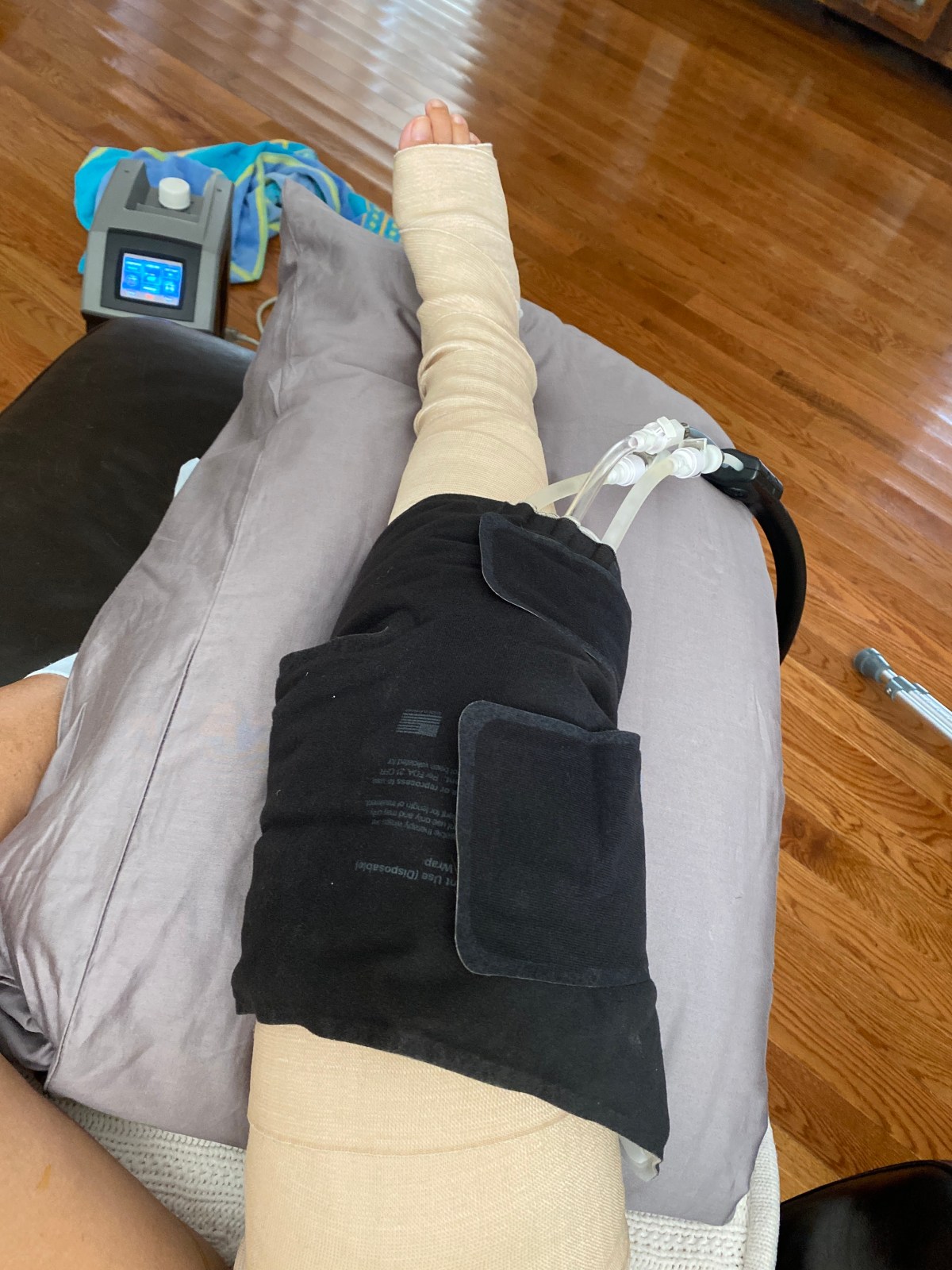
Quick backstory: I’ve played tennis my entire life, and my mid-forties knees are feeling it. Last December, an MRI revealed the pain wasn’t going to go away on its own and surgery was necessary to replace the damaged cartilage with donor cartilage. (If I were younger, the doctor could’ve taken my own cartilage from somewhere else, but I’m over 35 or whatever the age cut-off is for a healthy transplant.) As most things medical, the procedure is expensive; the donor tissue alone cost $11,000. Yikes. Turned out, the group insurance my husband had through his employer denied coverage, and come to learn, almost every other carrier would cover it. Unfortunately, we were a couple of weeks past the current plan’s renewal date and were stuck with it. No way could we afford to pay for the surgery without insurance, so I was out of luck.
Until March, when a pharmaceutical company purchased one of the drugs my husband sold and he was technically a new employee, thereby permitted to change his health plan. Six months later, delayed by reasons other than insurance, I finally got to have my knee repaired. Hitting the max out-of-pocket in the last quarter of the year stings a little, but you do what you have to do when you get the chance to do it, right? I have much to learn, yet, but thought I’d share some facts regarding Tennessee Health Insurance since we are coming up on Open Enrollment for 2021.
Open Enrollment is the annual period during which you can enroll in a new health insurance plan for the coming year. If you’re an employee eligible for insurance through your employer, Open Enrollment is the period during which you can sign onto your company’s insurance policy or switch to a different policy. Though you can usually drop your coverage at any point in the year, you may only sign onto a new plan during the Open Enrollment window.
If you find yourself in a position similar to mine, you may qualify for a special enrollment period with a qualifying event, such as:
- Changes in your household: marriage or divorce; a new baby or adoption; the death of a spouse in the last 60 days; a significant increase or decrease in salary.
- Changes in your residence: moving into a new zip code or from transitional to permanent housing.
- Loss of coverage: anyone in the household lost coverage within the past 60 days or anticipates losing coverage in the next 60 days, like a child being removed from a family policy at age 26 when they no longer qualify.
- Other qualifying life events: leaving incarceration, gaining residency or citizenship status or gaining membership in a federally-recognized tribe.
Open enrollment for 2021 health plans will run from November 1 – December 15, 2020. Residents with qualifying events can still enroll or make changes to their coverage for 2020.
from healthinsurance.org
When we were looking through all the different options, we had no idea what we were looking for beyond in-network and out-of-network. We had a general understanding of key words, but didn’t know how these terms translated into dollars. Depends on the specific code and charges billed by different providers and is therefore, a bit of a crap shoot, to be blunt. Familiarize yourself with these terms as defined by Benzinga:
- A premium is a monthly fee paid to the insurance company to keep your policy active.
- You pay out of pocket for a deductible before your insurance coverage kicks in. All insurance plans have different deductibles. A lower deductible means you’ll pay a higher premium each month. Some insurance plans have no deductible at all.
- A copay is a flat fee you pay each time you go to the doctor or get a prescription filled. It’s important to note that your copay does not go toward meeting your deductible.
- Coinsurance is a percentage that is shared between you and the insurance company. Some common coinsurance amounts:
- 80/20, where the insurance company pays 80% of the cost and you pay 20%
- 70/30, where the insurance company pays 70% and you pay 30%
Residents of Tennessee pay an average of $7,372 per year on health insurance, according to the Kaiser Family Foundation. That’s a few hundred dollars below the national average.
from Benzinga.com
It’s helpful to note the following factors will raise your costs, so avoid the ones you can control (diet, exercise, tobacco):
- Body mass index: A high body mass index (BMI) can cause certain negative health conditions, including diabetes and heart disease. Insurance companies use BMI as one of the many factors to assess your risk level and how much you’ll pay for insurance.
- Tobacco use: Smokers pay more for health insurance. Nearly 23% of Tennessee residents smoke — this is the fourth-highest number in the country.
- Age: Older people generally have more health conditions, so you may pay as much as 3 times more if you’re a senior citizen.
Generally speaking, health insurance plans cover treatment for illnesses and injuries but also cover preventive care like health screenings and vaccinations. There’s often no cost associated with preventive services. What’s covered and not covered will depend on your plan, but core benefits are normally the same across all health insurance plans.
What Does Health Insurance Cover?
- Ambulance services
- Emergency services
- Hospitalization
- Newborn and maternity care
- Prescription drugs
- Rehabilitative services
- Laboratory services
- Mental health care
- Wellness checks
- Pediatric care
What Does Health Insurance not Cover?
Health insurance covers a majority of the costs associated with the treatment of illnesses or injuries but there are some things that insurance companies do not cover.
- Elective or cosmetic procedures, like weight-loss surgery or plastic surgery
- Long-term nursing home care
- Infertility treatments
- LASIK (laser surgery to improve vision)
- Alternative therapies
- Dental, vision and hearing

Before I go down the rabbit trail of HMOs, PPOs, HSAs and more, I will leave you here and go ice my knee. Be well and take care of yourselves, friends.
 Crossing T's and Dotting i's