Deductible Do’s and Don’ts

Talk to your agent to determine how changing your deductible could affect your bottom line.

A deductible is basically the amount you agree to pay in the event of a claim, either a specific dollar amount or a percentage of the total amount of insurance on the policy. For example, we have a $500 deductible on our auto insurance and a 1% deductible on our home insurance. True story, we just added our 16 year old son to the auto policy and his rate is rather high right out of the gate. I asked if it would save us money to increase the deductible to $1000 or more and the savings were not that large, like $6 a month, so I left it. At the three month mark of receiving his drivers license, my son wrecks his car. Thankfully, no injuries, but the claim is going to raise his already high rate even higher. Thankfully, no one was hurt. Yes, I repeated myself because I only feel better with the reminder that things could’ve been much worse. That $500 deductible doesn’t sting quite as much either, but it’s also something we’d prefer never to use. Alas, we have teenage drivers so it comes with the territory. We are glad everyone is okay and cars can be repaired. Still. . .
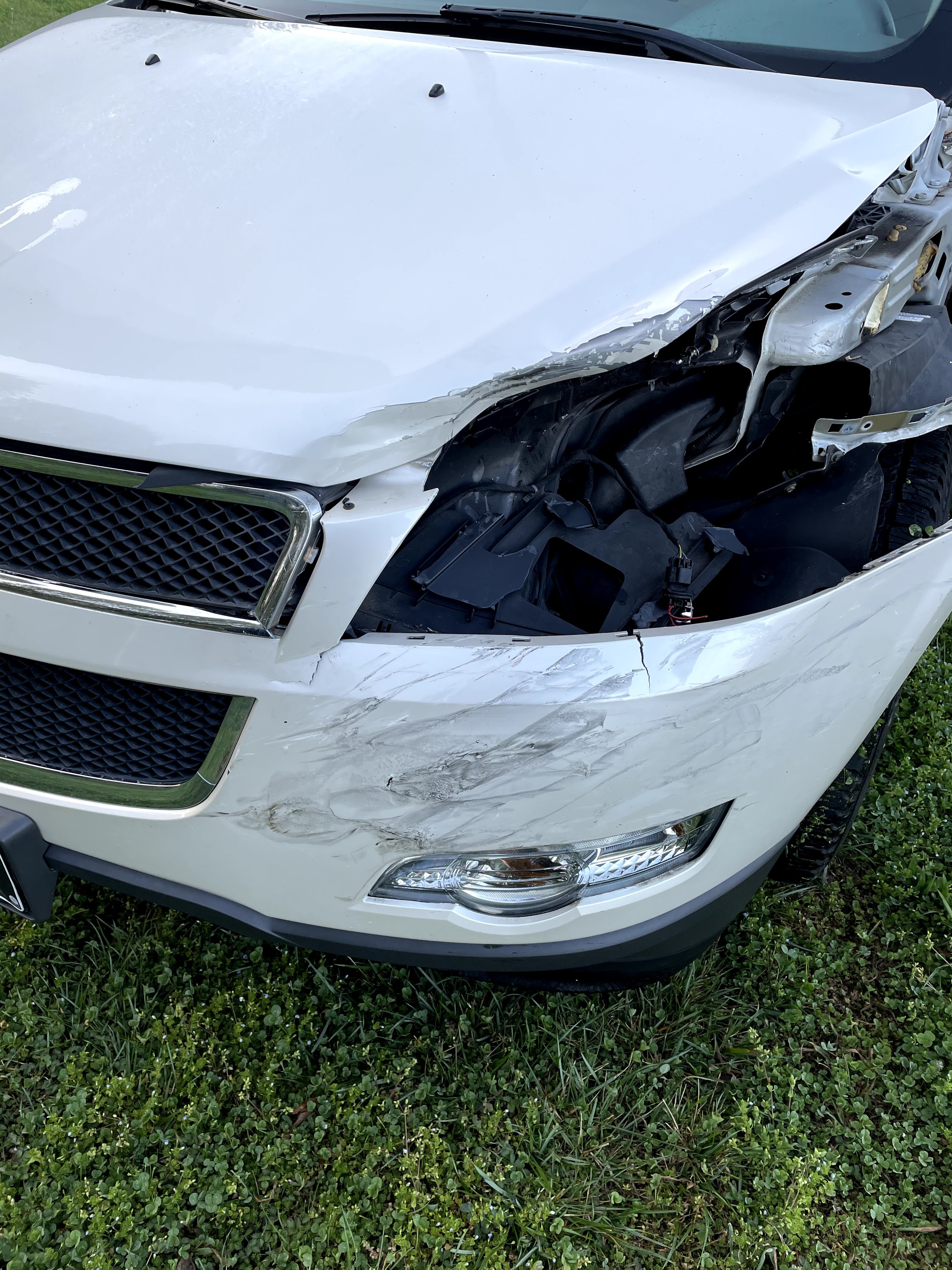
Ugh.

Back to deductibles. Good news is you get to choose your own. Tennessee has minimum car insurance requirements for bodily injury, property damage and uninsured motorist bodily injury:

  • Bodily injury liability: $25,000 per person and $50,000 per accident
  • Property damage liability: $15,000 per accident
  • Uninsured motorist bodily injury: $25,000 per person and $50,000 per accident*
  • Uninsured motorist property damage: $15,000 per accident*

*Note, deductibles are paid for each claim. So you can’t “hit your deductible” as we can do with health insurance.

If you have a loss that adds up to the amount near your deductible, first, always check with your agent, but most times you’re better off paying for the repair without filing a claim. Your insurance will increase and some companies will drop you after filing multiple claims, so you have other considerations besides reimbursement.

“Take a new look at your deductibles for car and homeowners insurance,” says Julie Murphy Casserly, CFP and author of “The Emotion Behind Money.”

“See if you’ve built up enough savings so that you don’t need a $250 deductible but can go up to $1,500 deductible and decrease what you’re paying to your insurance company every month in premiums,” she says.

Increasing your deductible to $1,000 could reduce your premium by up to 25 percent and save money, she says. On a $500 premium, that could mean pocketing more than $100 in savings this year. [Excerpt from bankrate.com]

Finance and insurance analyst Laura Adams explains, “It’s important to know what [deductibles] are and when they apply to various claims. If you don’t have enough savings to pay a deductible after getting into a car accident or having a tree fall on your roof, you might not be able to complete needed repairs.”

YouGov Plc conducted a nationwide survey. In early September 2020, they gathered data from more than 2,800 Americans. This study found that over half (61%) of the property insurance policyholders surveyed are not very confident they know what their insurance deductible is for their policy. More than 78% of policyholders have some concern that they wouldn’t be able to afford the costs of a claim, and 36% wouldn’t be able to cover a claim using their savings.

That’s a problem. Scott Holeman, Media Relations Director at the Insurance Information Institute (III), says, “We offer this advice: Never take a higher deductible than you can afford. Choosing a high deductible can mean a lower monthly insurance payment, but it also means a higher bill to pay when things go wrong.”

Paying a little extra each month may be worth it to you to have a lower and easier to manage deductible, as in the case of covering a teenage driver, but if you are generally a safe driver and have funds to cover a higher deductible should you experience a loss, look into lowering that monthly premium. You get to decide, but asking your agent for advice is a good idea and it’s what they are there to do. Mike, Billie and Susan are here to answer any questions and review your deductibles with you.

Drive safely.
11 Tips from a Pro

Insurance can be confusing–have enough, too much or even need it at all?

I am constantly learning from Cyndi Jeffers, CIC, and thought you might also. She has answered thousands of questions over her 30+ year career, but we don’t have enough time or space to cover them all today. We’ll start with the following 11 points to clear up some common misconceptions about different types of insurance.

  • PRO TIP: When shopping for insurance coverage, make sure you compare apples to apples. You get what you pay for with insurance, and a lower premium can be an indicator that some of the coverages you had are no longer there, or that the agent didn’t input your information correctly (which could result in denial of a claim).

  • How much liability insurance coverage do I really need? Purchase enough coverage to protect your assets. If you own a business, and it’s not an LLC or corporation, include the business assets in the total and make sure your business liability is enough to protect your business and personal assets.

  • When should I add Long Term Care? Long Term Care insurance is not just for the elderly – a bad accident or a debilitating disease can affect a person of any age.

  • PRO TIP: Take responsibility for maintaining your home. Most things that happen are caused by lack of maintenance, and insurance doesn’t cover that.

  • PRO TIP: Drive defensively – don’t assume the other driver knows what they’re doing. Most auto accidents are caused by distracted drivers.

  • What’s the difference between Market Value and Tax Appraisal? Property insurance is not based on market value or tax appraisal. Market value is a reflection of what someone is willing to pay for a property; tax appraisal is typically based on market value, a set millage rate, and a tax rate. Neither market value or tax appraisal are good indicators of what it would cost to rebuild your home or business building as it stands now – that’s what insurance is for.

A millage rate is the tax rate used to calculate local property taxes. It represents the amount per every $1,000 of a property’s assessed value. Assigned millage rates are multiplied by the total taxable value of the property in order to arrive at the property taxes.

from investopedia.com

  • When should I contact my agent? Major changes should always be reported to your agent! It’s not about possibly raising your premium – it’s about continuing to pay premium for a policy that may no longer fit the situation and therefore may not provide coverage in the event of a loss.

  • Can I use my personal auto insurance for my company vehicle? If you use a personal vehicle for business, be sure your agent is aware of it – there is only limited coverage for business use on a personal auto policy. If you have an advertising sign on your vehicle or you have employees who drive your vehicle, it’s time for a commercial auto policy.

  • I just wrecked my car. Who do I call first? Before you call the 800 number to file a claim, contact your agent to discuss what happened. People often panic and call the insurance company, setting up a chargeable claim when maybe the damage is less than the deductible, the other person’s insurance is responsible, or you find it’s a maintenance issue not covered by insurance. Your agent is there to help you!

  • Can I change the type of roof on my house that was damaged by a storm? The basic purpose of insurance is to put things back the way they were before the loss occurred – it’s not meant to provide additional benefits. If you didn’t have a metal roof on your home before the hail storm, you will not have one after the claim is settled (unless you pay the additional cost yourself).

  • PRO TIP: If you know of someone who committed insurance fraud, report them – their actions are affecting everyone, including you!  

Insurance fraud is a major factor in insurance premium increases. Property & casualty insurance companies lose approximately $34 billion a year to insurance fraud, while as much as $259 billion was paid out as a result of healthcare fraud in 2010 alone. In addition, the cost of combating fraud is also passed on to the consumer. Insurance fraud takes many forms and is committed by insureds, contractors, healthcare professionals, etc.

Revealing Truths about Full Coverage Auto Insurance

Don’t be fooled by the word “full.”

Full coverage does not mean everything is fully covered if you were to wreck your car or have an accident. It is a package term used to describe a combination of comprehensive, collision and liability coverage within one policy.

  • Comprehensive Coverage is also referred to as Other-than-Collision because it covers your vehicle if stolen, vandalized, set on fire, and other random things that don’t involve running into another object and are outside of the driver’s control.
  • Collision Coverage includes a fender bender or running into a telephone pole or fence. It helps pay for the cost of repairing or replacing your vehicle up to the actual cash value if you run into another vehicle, a snowbank, or an object in or on the ground (such as a guard rail or roadkill).
  • Liability Insurance helps pay the expenses the other driver incurs if you are found at fault for an accident.

Full Coverage does not exist.

Tennessee requires that car insurance policies include, at a minimum, the following coverage limits:

  • Bodily injury liability: $25,000 per person and $50,000 per accident
  • Property damage liability: $15,000 per accident

REMEMBER:

  • Automobile liability insurance is financial protection for an at-fault driver who harms someone else or their property in a car accident.
  • Bodily injury liability helps cover medical expenses for those involved in the accident.
  • Property damage liability helps cover costs of repairing the vehicles of the other drivers involved in the accident.


Other important coverages to consider:

  • Medical Payments Coverage–regardless of who’s at fault, this covers medical bills for you and any passengers in your car if injured in an accident.
  • Uninsured/Underinsured Motorist Coverages (UM/UIM)–designed to protect you and your vehicle if someone hits you and either doesn’t have insurance or not enough insurance to cover the costs.
  • Custom Parts & Equipment Coverage–protection for after-market upgrades to your car, including a sound system or custom grill. Your standard collision and comprehensive coverages may not cover upgrades that were not factory-installed.
  • Rental Car Coverage–this covers the cost of a rental car while yours is in the shop after a covered incident.
  • Loan/Lease Gap Coverage–this coverage can help cover the remaining balance you may owe on your loan or lease (up to an increase of 25% of your car’s actual cash value).
  • Emergency Roadside Assistance (Towing/Labor) Coverage–This coverage is there to help when your car breaks down, you have a flat tire, or you run out of gas. Emergency roadside assistance covers up to $75 per incident.

Speak with your agent to determine how much coverage you have and how much coverage you need.

We will make sure you aren’t fooled by full coverage claims.

The Big Four: Prepare for Disaster!

Natural disasters can occur anytime, anywhere with little or no warning.

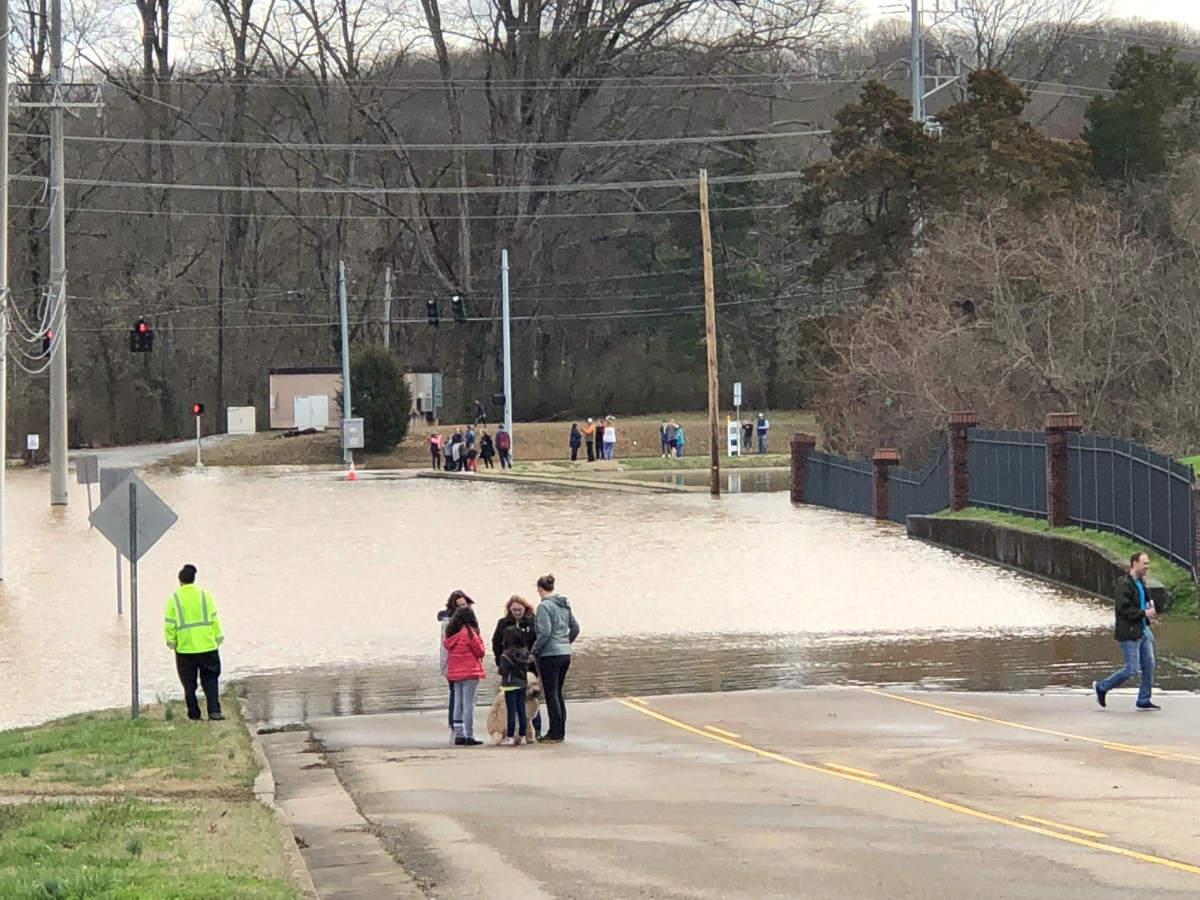
Flood.

Earthquake.

Tornado.

Sinkhole.

While we can’t prevent a natural disaster, we can prepare and attempt to protect property and possessions from the forces of Mother Nature.

If you only read one line on this page, read this: Homeowners insurance does not cover flood!  


Flood insurance is available through only 60 insurance companies who participate in the National Flood Insurance Program (NFIP) in 22,000 communities across the US.  Oak Ridge is one of those communities.  Flood insurance covers overflow of inland water (lakes, rivers); pooling or runoff of surface water from any source (rain); collapse of land along a body of water due to wave or water currents; and mudflow.  Yes, mudflow – if your house is on a hill, you may still need flood insurance!

In fact, the NFIP reports that more than 20% of their claims come from outside the high-risk areas. Federal assistance may only be available to those without flood insurance if the president declares a disaster. However, that assistance is not free – it comes in the form of either a USBA loan (which must be paid back) or a FEMA disaster grant (which averages about $5,000 per household). In addition, many people do not meet the strict eligibility requirements, so they do not qualify for either option.

The average flood insurance claim is around $30,000.

Keep in mind, there is typically a 30-day waiting period for coverage to begin after a policy takes effect.  A flood policy covers the building, its foundation, electrical, plumbing, heating & air systems, hot water heaters, appliances, permanently installed carpeting, etc. Contents coverage can also be purchased.  Premiums are based on the property location, so high-risk areas will have higher premiums while low to moderate risk areas may qualify for the Preferred Risk program.


Earthquakes happen in our area more often than anywhere else in the US! Most are small, but in 1973, Maryville had a 4.7 magnitude quake and in 1913, Knoxville had a 5.9.  Earthquake coverage is not automatically included in a Homeowners policy, and some insurance companies do not offer the coverage at all. After an earthquake occurs, there is typically a waiting period before coverage can be purchased.  The deductible is typically a percentage of your dwelling or building limit.

2014 Seismic Hazard Map from usgs.gov

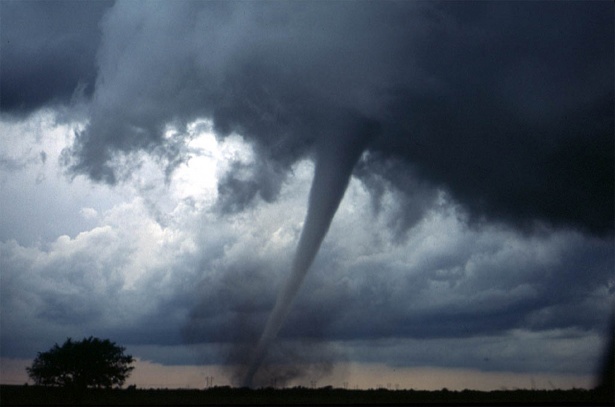
Tornadoes are becoming more common in Tennessee. Since 1979, tornado alley seems to be moving eastward, and one report puts Tennessee in the top 4 of deadliest states for tornadoes.  In 2002, a tornado devastated the Mossy Grove community in Morgan County.  Our area often experiences high winds that down power lines and cause significant property damage. Many insurance companies now offer a separate wind/hail deductible on property policies, with a choice of either one deductible for everything or a higher deductible for wind/hail.

Stock Photo, public domain

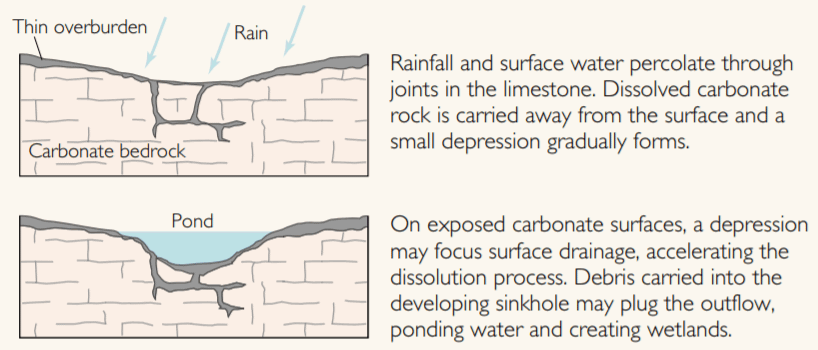
Sinkhole coverage is available on property policies in Tennessee – some companies automatically include it while others will add it for an additional premium. Limestone makes up a lot of ground beneath East Tennessee soil, and it is quick to erode with water.

Typically, sinkholes form so slowly that little change is noticeable, but they can form suddenly when a collapse occurs. Such a collapse can have a dramatic effect if it occurs in an urban setting.

usgs.gov
From usgs.gov

Discuss your risk potential and options with your insurance agent before another disaster strikes!  

Our agents are happy to review your policy and confirm your coverage. Give us a call at 865-483-8483.

Content used by permission from original article written by Cyndi Jeffers, CIC, Commercial Lines Specialist at Herron-Connell.

Yes, there’s an App for that! Now what?

What to do with that new app on your phone or tablet?

Small, independent agencies like ourselves are launching apps for their customers’ convenience and to keep up with the big dogs, but figuring out how to effectively use them takes a little research and practice. It isn’t just a download and go situation. A little know-how is helpful.

A screenshot from the our app menu

Millennials and Gen Z’s aren’t the only generational groups using mobile technology every day.

More and more Boomers are using their phones and tablets to store information and manage accounts with apps.

Herron-Connell has made using an app to manage your insurance policies easy.

Okay, so you’ve downloaded the app from either Google Play for Android devices or the App Store for Apple devices. Well done! Now what?

The most sensible first step is to click on the tab labeled, “Getting Started,” and then read each instruction. However, if you’re like me, you wing it and only read the directions after you get lost. Which usually works out okay if you have plenty of time on your hands, but understanding the process before you need to submit a claim will help in the long run. You will probably be under enough stress at the time of an incident that struggling to post photos of the damage is the last thing you need.

We aren’t teaching old dogs new tricks. undefined

Our agents are happy to help every customer, but we are not so willing to add a new driver at midnight. Funny that those administrative tasks usually come to mind just as you lay your head on the pillow. The app is always awake and ready to make changes to your policy, so you can rest easy.

Here’s a link to a short video showing where to begin. https://www.loom.com/share/2406374d7e3b420c9f161e5ec3b25815

Calling All Pickers!

3 Tips to Protect Your Treasure

Your first thought after reading this title indicates your maturity level, whether you are a bluegrass fan, and/or if you are a collector of Americana and watcher of reality television. This post will address the latter, but everyone is welcome to sit a spell. We are talking about collectibles and the first three things to do to protect your buttons.

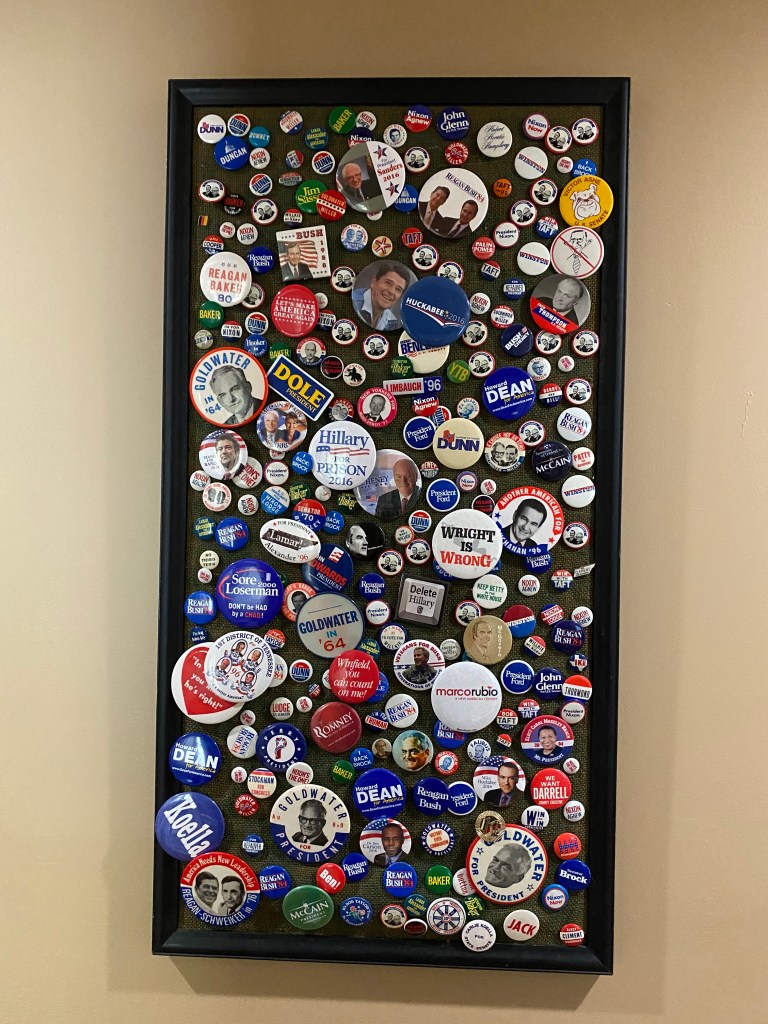
Political campaign buttons carry sentimental value, but depending on supply and demand (which currently is aplenty), one might fetch a couple of dollars each at best. Many are good for a laugh.

“Abraham Lincoln was the first president to use these items strategically as a campaign tool in the 1860 presidential election. However, the first mass produced and collectible buttons for a presidential campaign started with the McKinley vs Bryan race in 1896.”

Kathleen Moenster, nps.gov

More campaign buttons from the hallowed halls of Herron-Connell
One man's trash is another man's treasure.

Start Here.

#1: Read your insurance policy.

Don’t roll your eyes, you’d be surprised how many people don’t read the fine print. If the terms rider and floater are new to you, definitely call your agent to decipher the lingo and make sure your collection is covered. Your homeowner’s policy covers your stuff to a certain extent, but collectibles, guns, furs, jewelry and art have additional coverage options that are well worth exploring and keeping the values up-to-date.

“Some policies limit coverage of non-household items to a maximum claim amount, usually $500 to $2,000.”

according to Investopedia

Which brings us to #2:

How do you measure its value?

You could. . .

Check recent auction selling prices and pricing guides.

Ask local antique and collectible dealers.

You should. . .

Make an appointment with a professional appraiser. Hourly rates typically run from $150 to $350, depending on experience and accreditation. Appraisers charge by the hour, the piece or total project — never a percentage of the value.

Keep receipts for newer items and any appraisal documents you might have. Appraisal documents may be necessary in order to process a claim and they are time-sensitive.

#3 Make a List, Finally

You may already have a gallery full of photos, or a dedicated Facebook page to your treasures, so you have a head start. Assemble your receipts, appraisals, photos and anything else relevant to the items in a file cabinet (ok), fireproof safe (better) or a bank deposit box (best). It’s like telling a fishing tale, your word won’t cut it without proof.

How could you even begin to describe this fish without photographic evidence?