Happy Trails 2021!

This post is for the intrepid traveler daring to leave their house.

Disclosure: I’ve never purchased travel insurance. I almost did when I took my daughter to NYC for her 18th birthday in 2020–January, mind you–but I made sure the arrangements were all refundable by a certain date. The fact that the city shut down less than two months later because of a pandemic would have been unimaginable, and has prompted travelers to take precautions they might not have otherwise. Here’s a primer on travel insurance.

I was more concerned about weather delays in NYC January 17-19, 2020.

Travel insurance is coverage designed to protect against risks and financial losses that could happen while traveling–from minor inconveniences like missed airline connections and delayed luggage to more serious issues including injuries or major illness. As we know, Covid-19 has shoved the elephant out of the room, so I’ll begin with FAQ regarding travel insurance coverage and cancellation for illness.

Does Travel Insurance Cover the Coronavirus Pandemic?

On January 21, 2020, the Coronavirus disease 2019 (COVID-19) became a named event, which affects the travel insurance coverage available for new policies purchased thereafter because it is known. Insurance is designed to protect you from an unpredictable or spontaneous loss. For example, if a hurricane ruins your trip, travel insurance would only cover you if you bought it before the hurricane formed. Be sure to purchase insurance as early as possible and always read the fine print no matter what policy you choose.

Comprehensive travel insurance

This is the typical policy that people imagine when they think of trip insurance. The comprehensive policy usually covers delays, cancellation due to sickness or death, lost luggage and some emergency medical costs.

Benefits included in comprehensive coverage may apply in the following unforeseen scenarios:

  • Emergency Medical Coverage: a sick traveler must see a doctor and/or go to the hospital during a trip.
  • Emergency Medical Evacuation Coverage: in rare cases, a sick traveler requires an emergency medical evacuation to the nearest appropriate hospital or back home for recuperation.
  • Trip Interruption: an extremely sick traveler cannot continue with a trip and must return home.
  • Cancel For Any Reason: Currently, if you are looking for trip cancellation coverage because you are concerned about the coronavirus, you will now need to purchase a plan that includes Cancel For Any Reason since the travel warnings are now foreseen. This benefit is time-sensitive and has other eligibility requirements, so not all travelers will qualify.
Some plans may exclude epidemics/pandemics and may not provide coverage for related issues. Please be sure to read the plan details carefully before purchasing.

Over the course of the coronavirus pandemic, many traditional travel insurance companies have expanded or adapted their existing coverage for travelers. In addition to the coverages above, examples of these may include:

  • Reimbursement for covered medical treatment during a trip due to a COVID-19 illness
  • Get sick with COVID-19 and must cancel a trip by physician’s order
  • Physician orders a quarantine before trip
  • Lost a job during the coronavirus pandemic by no-fault of your own

Cancel For Any Reason (CFAR) offers the most trip cancellation flexibility and is the only option available to cover fear of travel. CFAR is an optional, time-sensitive benefit with eligibility requirements, so not all travelers will qualify. Full terms of coverage will be listed in state-specific policy. If eligibility requirements are met, reimbursement is up to 50%-70% of the insured prepaid non-refundable trip cost.

InsureMyTrip.com

Does Emergency Medical Coverage Travel with You?

Some travel insurance plans do offer emergency medical benefits if you need a doctor or hospital visit during a trip. Check your personal health insurance plan first to understand coverage already in place. However, most health insurance plans don’t provide full coverage in foreign countries and some health plans provide no coverage at all. Travel insurance works in addition to your everyday health insurance and can help supplement medical costs if you get sick or injured before or during your vacation.

If you have Medicare or Medicaid, be aware that medical costs overseas are generally not covered.

Before purchasing a policy, it is imperative to read the policy provisions to see what exclusions apply, such as preexisting medical conditions, and do not assume that the new coverage mirrors that of an existing plan.

Emergency medical coverage may be redundant. Most health insurance companies pay “customary and reasonable” hospital costs if you become sick or injured while traveling, but few will pay for a medical evacuation.

From InsureMyTrip.com, medical plans and coverage to consider include:

  • Travel Medical Insurance is offered either as part of comprehensive travel insurance plans or can be purchased as a stand-alone plan. These plans only offer coverage while traveling outside of your home country. Contact your regular health insurance provider to inquire about global benefits and how your benefits apply when you are outside of your home country.
  • Emergency Medical Evacuation Coverage provides transport assistance in the event that you become seriously ill or injured while traveling. Generally, these plans provide emergency medical evacuation to the nearest appropriate care facility if the assistance company and the physician feel you’d be better suited at a different facility. For those who want to ensure transport to the hospital of their choice, travelers may want to consider also purchasing an air medical transport membership. If hospitalized during your trip, this membership may provide transport to a hospital of your choice, often closer to home, without it being determined as “medically necessary” as required on typical travel insurance plans. (For medical transport memberships, some destination restrictions may apply for evacuations related to COVID-19.)
  • Trip Interruption Coverage is included in travel insurance comprehensive plans. It’s a benefit that offers travelers reimbursement of their pre-paid, non-refundable expenses should they unexpectedly need to cut their travels short. However, there are exclusions for this, so be sure to review your policy carefully.

For travelers looking for more information regarding CDC regulations , please refer to the U.S Centers for Disease Control and Prevention website.

Lost or Stolen Luggage

Travel insurance can help cover expenses stemming from lost or stolen luggage. This is especially useful if an airline loses your bags, as it can be very difficult to get them to pay for lost luggage. In the United States, the Department of Transportation (DOT) requires airlines to compensate fliers up to $3,300 for lost baggage. In foreign countries that amount is a maximum of $1,750. But to receive those maximum amounts, passengers must provide receipts proving the value of the lost bags and their contents. And some airlines require that the claim be filed within 21 days.

To make matter worse, DOT doesn’t define when baggage is officially lost (as opposed to just “delayed”). Overseas, a bag is only considered “lost” after 21 days. For delayed bags, DOT only requires airlines to provide victims with enough money to buy necessities like clothing, medicine and toiletries.

The possibility of baggage and personal belongings being lost, stolen, or damaged is a frequent travel problem. Many travel insurance policies pay for belongings only after you exhaust all other available claims. Your homeowners or renters insurance may extend coverage outside of your domicile, and airlines and cruise lines are responsible for loss and damage to your baggage during transport. Also, credit cards may provide automatic protection for things like delays and baggage or rental car accidents if used for deposits or other trip-related expenses.

What if. . . Plans Change

Travel insurance can help cover costs stemming from trip cancellations. Most resorts or cruise lines won’t give you a full refund in the event of a cancellation. If you cancel two weeks or more before your trip, most resorts will at least charge a cancellation fee; many cruise lines might only give you a 25% refund or will give you partial credit on another cruise. If you cancel within two weeks of a trip, with most companies you won’t give any refund whatsoever. Unforeseen circumstances happen, and you want to be covered just in case.

Before looking into travel insurance, think about the reasons you might cancel. Is a trip delay due to weather going to dramatically change your vacation? Is it possible your school year will be extended, or you will need to take a work-related trip instead? Are there acts of war in the country you’re going to visit? Are you nervous about the CDC issuing a travel warning for your vacation destination?

These are all valid reasons, but not all travel insurance covers these concerns. When booking a pricey trip, investigate insurance at the same time. Some policies require you buy travel insurance within a certain amount of time after making your initial trip payment, such as within 10 to 30 days.

Purchasing Travel Insurance

Travel insurance will vary by the provider on cost, exclusions, and coverage. Be sure to read all disclosure statements and check what protections your credit card might offer.

Coverage is available for single, multiple, and yearly travel. Per-trip coverage protects a single trip and is ideal for people who travel occasionally. Multi-trip coverage protects numerous trips occurring in one year, but none of the excursions can exceed 30 days. Annual coverage is for frequent travelers. It protects for a full year.

Premiums are based on the type of coverage provided, a traveler’s age, the destination, the duration, and the cost of your trip. Standard per-trip policies cost between 4% to 10% of the trip’s cost. Specialized policy riders focus on the needs of business travelers, athletes, and expatriates (i.e. working overseas).

Also, it is suggested that a traveler register travel plans with the State Department through its free travel registration website. The nearest embassy or consulate can contact them if there is a family, state or national emergency.
Worthy travel insurance plans always include the following provisions:

  • Coverage for most countries in the world (including the places you plan on visiting).
  • Some coverage for your electronics (and have the option for a higher coverage limit).
  • Coverage for injury and sudden illnesses.
  • Offer 24/7 assistance (you don’t want to call to be told to call back later).
  • Coverage for lost, damaged, or stolen possessions like jewelry, baggage, documents, etc.
  • Coverage for cancellations for hotels, flights, and other transportation bookings if you have a sudden illness, death in the family, or some other emergency.
  • Coverage for political emergencies, natural disasters, or strife in the country that cause you to head home early.
  • Financial protection if any company you are using goes bankrupt and you are stuck in another country.

Recommended online agencies for the best service and value are:

SafetyWing (all ages)

Insure My Trip (best for those over 70)

Medjet (for additional evacuation coverage)

What’s Not Covered By Your Travel Insurance

Just as important as knowing what your plan covers is knowing what it doesn’t cover. Generally speaking, most plans don’t cover:

  • Accidents sustained while participating in extreme adventure activities such as hang gliding, paragliding, or bungee jumping (unless you pay for extra coverage).
  • Alcohol- or drug-related incidents.
  • Carelessness in handling your possessions and baggage.
  • Recklessness (how “reckless” is defined is a matter up to each company).
  • Pre-existing conditions or general check-ups. For example, if you have diabetes and need to buy more insulin, you won’t be covered. If you want to go see a doctor for a general check-up, you aren’t covered either.
  • Lost or stolen cash.
  • Your theft coverage won’t cover you if you left something in plain sight or unattended.
  • If civil unrest makes your destination unsafe but your government hasn’t called for an evacuation, you’re probably out of luck too.

Options to include:

  • Payment for expenses if you get sick or injured on a trip
  • Travel medical and accident coverage
  • To be taken to the nearest hospital or flown home if necessary
  • Emergency evacuation and repatriation
  • Reimbursement if you get sick and have to cancel or end your trip early
  • Trip cancellation AND trip interruption
  • Payment for lost, stolen or damaged luggage or goods
  • Theft and lost baggage overage
  • Help finding a doctor abroad
  • 24-hour assistance
  • Payment for rental car damage
  • Car collision insurance (CDW)

[The above excerpted from Nationwide.com]

Photo by Element5 Digital on Pexels.com

I believe travel is good for the soul, and travel insurance is good for peace of mind. Look into the options, talk to your agent, and decide whether it’s worth it to you.

Cheers to 2022!

Weathering the Winter in East TN

A weatherized home will be healthier, safer and more energy efficient. Here’s why and how to do it.

Every winter, school-aged Tennesseans (and weary teachers) pray for enough snow to cancel school. They have tricks, like flushing an ice cube and sleeping in pjs turned inside-out, in hopes that the snow will stick. Some areas in the mountains have accumulation, but we here in the valley don’t see much; rather, the snow quickly melts upon landing. When school is canceled, usually the danger is from black ice and most lawns are clear by the afternoon, so we don’t have a typical winter filled with snow. The effects of harsh weather can accumulate despite what we see. Keep reading to find out the benefits of and instructions for weatherizing your home. Note: all seasons contribute to the wear and tear of a home and your health.

Tennessee has all four seasons – winter, spring, summer and fall – each with different weather conditions. 

weatherization benefits your health

Weatherization can maintain or improve respiratory health, mental health, physical safety and wellness.  Managing a steady temperature improves indoor air quality and benefits everyone.  Homes that get too cold in the winter or too warm in the summer increase the risk that residents will develop illness and increase the number of visits to the doctor or hospital. Poor indoor air quality or asthma triggers increase the risk of illness, so people with preexisting medical conditions like asthma, emphysema or COPD will likely benefit even more. 

How do I know if my home is weatherized?

If you have to ask, it probably isn’t but here are some ways to know. Do you feel comfortable at home? If you are experiencing unmanageable temperatures, uncomfortable indoor air conditions, or excess moisture in your home, you will likely benefit from weatherization. Some other things to look for are moisture condensed between the glass panels of a window; a furnace that cannot maintain a comfortable indoor temperature; a drafty door or window; a leaky roof.

Air sealing, insulation, moisture control and ventilation are all types of weatherization.  The US Department of Energy (DOE) has recommendations for these four topics:

8 basic ways to keep a healthy home:

  1. Keep it Dry.
  2. Keep it Clean.
  3. Keep it Pest-Free.
  4. Keep it Safe.
  5. Keep it Contaminant-Free.
  6. Keep it Ventilated.
  7. Keep it Maintained.
  8. Keep it Thermally Controlled.

Helpful Do’s and Don’ts

Do: One of the first things you should do is schedule a furnace inspection. Whether you have forced hot air or hot water baseboard/radiators, it’s always a good idea to have your furnace or boiler inspected and serviced before the winter months arrive. When you do so, make sure you are hiring an HVAC professional to do the work. If you have forced hot air heat, this is also a good time to have your ducts cleaned. Stocking up on filters so that you can change them monthly is a good idea. If you have not done so already, consider switching to a programmable thermostat, which can add up to big savings once the cold weather hits.

Don’t: You shouldn’t wait until the first cold night to turn on your furnace. That’s when you will actually need it. It’s best to test it prior to needing it. Also, don’t attempt to service your furnace yourself. If the cold weather has arrived and you will be going away for a short time, don’t turn the heating system off. It’s best to just turn it down to a minimum temperature of 50° or so. That way you will ensure that nothing will freeze while you’re gone.

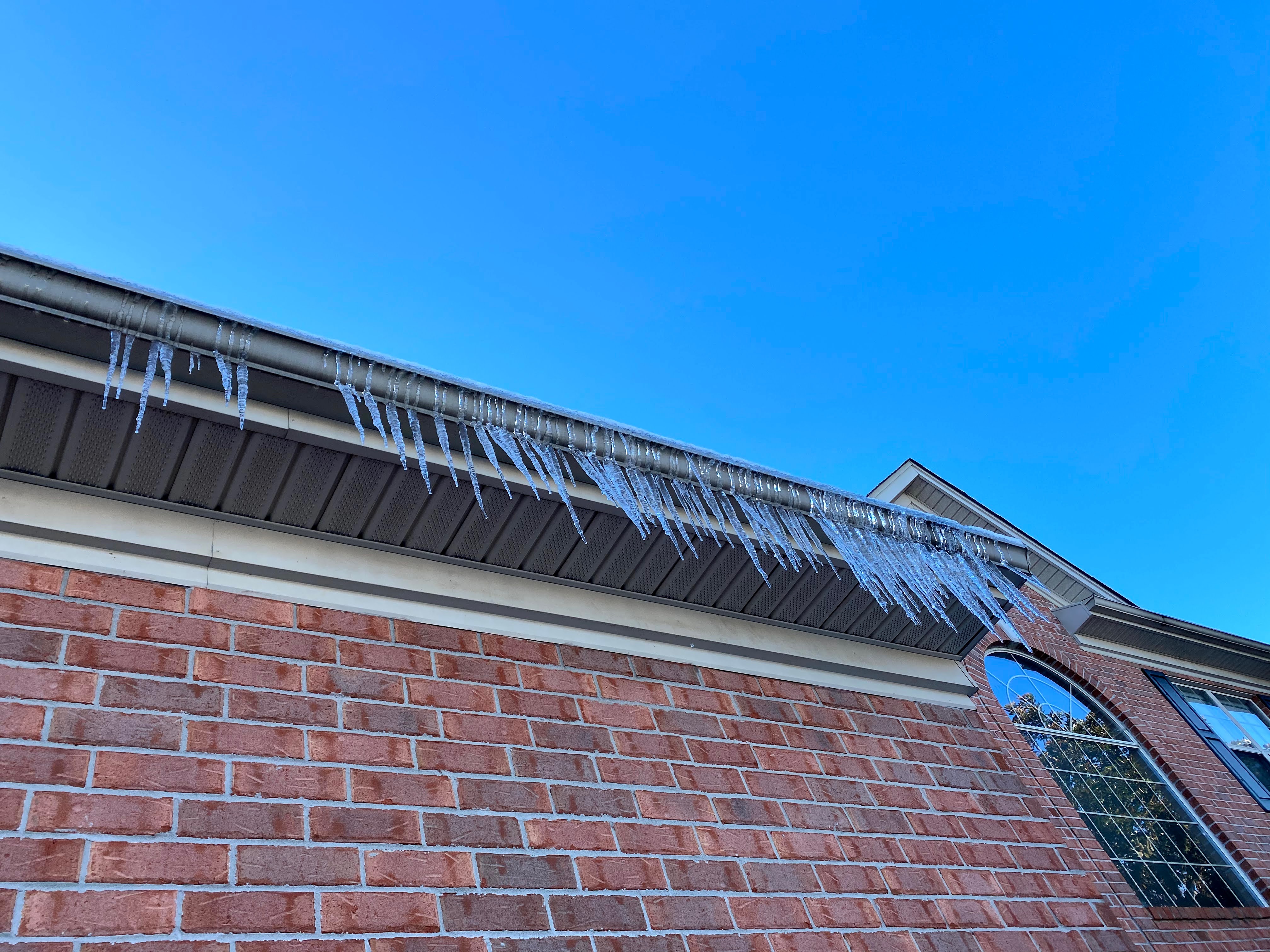
The dangers of winter come in many forms.

Do: Take a walk around the outside of your home. Keep an eye out for cracks in your homes foundation and repair them immediately if found. Also, clean out your gutters and downspouts. This will keep debris from trapping moisture, which can freeze, buildup and damage your gutters, roof and siding.

Don’t: Leaving hoses connected to the outside of the house can cause damage to your plumbing. Make sure that hoses are disconnected and they are drained completely. If you have outside AC units, don’t cover them with plastic as it could cause damage to them over the winter.

Do: Have your chimney inspected and cleaned if necessary. If you don’t have one already, get a cap or screen installed on the top of your chimney to keep out rodents and birds. If you have a fireplace, inspect the damper to make sure it opens and closes properly.

Don’t: Don’t just hire anybody to clean your chimney. Make sure that they are a certified chimney sweep. The Chimney Safety Institute of America (CSIA) has resources available to help you to learn more. Make sure that you do not store your firewood next to the home. This can attract bugs and rodents.

Do: Inspect your windows and doors for gaps. Add weatherstripping and insulation where appropriate. If you have summer screens in your basement windows, replace them with their glass counterparts for the winter.  Check your attic for adequate insulation levels and add more as needed.

Don’t: Be careful not to over-insulate your attic. Often, insulation can be packed too tightly, which reduces its R-value. In addition be careful not to clog the vents at the eaves, reducing airflow and resulting in issues down the road.

[The above text is from Christmas Lumber.]

the benefits of weatherization

According to the Oak Ridge Institute for Science and Education, after a home weatherization residents note additional benefits related to health and finances:

  • Reduced Carbon Monoxide Poisonings
  • Reduced Home Fires
  • Reduced Thermal Stress on Occupants
  • Reduced Asthma-Related Medical Care and Costs
  • Increased Productivity at Work & Home Due to Improvements in Sleep
  • Fewer Missed Days at Work
  • Reduced Use of High Interest, Short-Term Loans
  • Increased Ability to Afford Prescriptions
  • Reduced Need for Food Assistance

assistance with weatherization

Contact your energy provider.  Many utility companies have websites, newsletters and in-home services to help their customers understand energy consumption and weatherization.  Some utilities will even offer an energy audit and provide information for the U.S. Department of Energy Weatherization Assistance Program.

The  weatherization assistance program works to help low income households meet their energy and weatherization needs. Click to the Department of Energy Weatherization Assistance webpage to determine eligibility and learn more.

What is Tennessee Weatherization Assistance Program?


“The Weatherization Assistance Program (WAP) is 100 percent federally funded through a grant from the Federal Department of Energy. The program provides funds to states to assist with the weatherization of the homes of low income elderly and disabled adults and families. The program is administered through contracts with an established network of 19 non-profit agencies and local governments experienced in providing weatherization services. WAP services are available in all 95 counties. Applicants must meet low-income eligibility guidelines based on established Federal poverty guidelines. Activities include: insulation, storm windows, caulking, and other related activities to reduce home energy costs and increase home energy efficiency.” [www.tn.gov]

U.S. Department of Energy
Weatherization Assistance Program (WAP)
www.energy.gov/eere/wipo/weatherization-assistance-program

U.S. Environmental Protection Agency (EPA)
Indoor Air Quality
www.epa.gov/indoor-air-quality-iaq/energy-weatherization-and-indoor-air-quality

Tennessee Valley Authority (TVA)
EnergyRight Solutions
www.tva.gov/Energy/EnergyRightSolutions

Tennessee Housing Development Agency (THDA)
Weatherization
thda.org/business-partners/weatherization

Oak Ridge National Laboratory
Weatherization and Intergovernmental Programs Support
weatherization.ornl.gov

U.S. Department of Energy Weather Assistance Program
Fact Sheet
www.energy.gov/sites/prod/files/2018/06/f52/EERE_WAP_Fact%20Sheet-v2.pdf  

Oak Ridge National Laboratory
Health and Safety Audit Design Manual
weatherization.ornl.gov/wp-content/uploads/pdf/2016_Present/ORNLTM2017-498.pdf


While this information isn’t directly related to Tennessee insurance, the tips and benefits to be gained from weatherization will surely help in the areas of life, health, home and even auto. Now, to apply what I’ve learned and not procrastinate checking on these things until tomorrow…or next summer. Or next winter. Time moves quickly.

Long Term Care is NOT For You

Not just for you . . .Long-Term Care Insurance is also for the people who would take care of you without it.

This is a professional blog.

But this is going to get personal.

I haven’t written a blog post since August. I couldn’t find the words in September. Since my dad’s health faltered to a point that he nearly died in the hospital. Since I struggled every day to help my mom find important documents and pertinent information. He was not cognitively aware or able to help. I had to dig through piles of disorganized papers and discovered more than a daughter should know, frankly. I’ll do my best to steer clear of that rabbit hole. It’s not a fun trip and won’t help anyone. This post is about an insurance topic that will affect every reader, in one way or another, if you or someone you love lives long enough.

Immediately following my dad’s hospitalization, my family quickly realized we were out of our depths and contacted a law firm that specializes in elder care. They have been a lifeline for me and I highly recommend consulting with experts early so that you aren’t to the point of drowning before reaching out for help. Perhaps, you have already made your own arrangements so your loved ones don’t have to scramble behind the scenes. Kudos to you. A thousand gold stars. My husband and I are committed to taking the steps necessary so our kids will not be handed the burden of responsibility for our care. Since they are teenagers, that’s hard to imagine, but long-term care requirements don’t only arise with old age.

[A current status report feels necessary to avoid unwarranted suspense. My dad mostly recovered and is receiving home healthcare after a twenty-day stay in a rehab facility last month. His diagnosis remains unclear, however through this experience, I can testify to the importance of having Long-Term Care insurance regardless of an individual’s prognosis.]

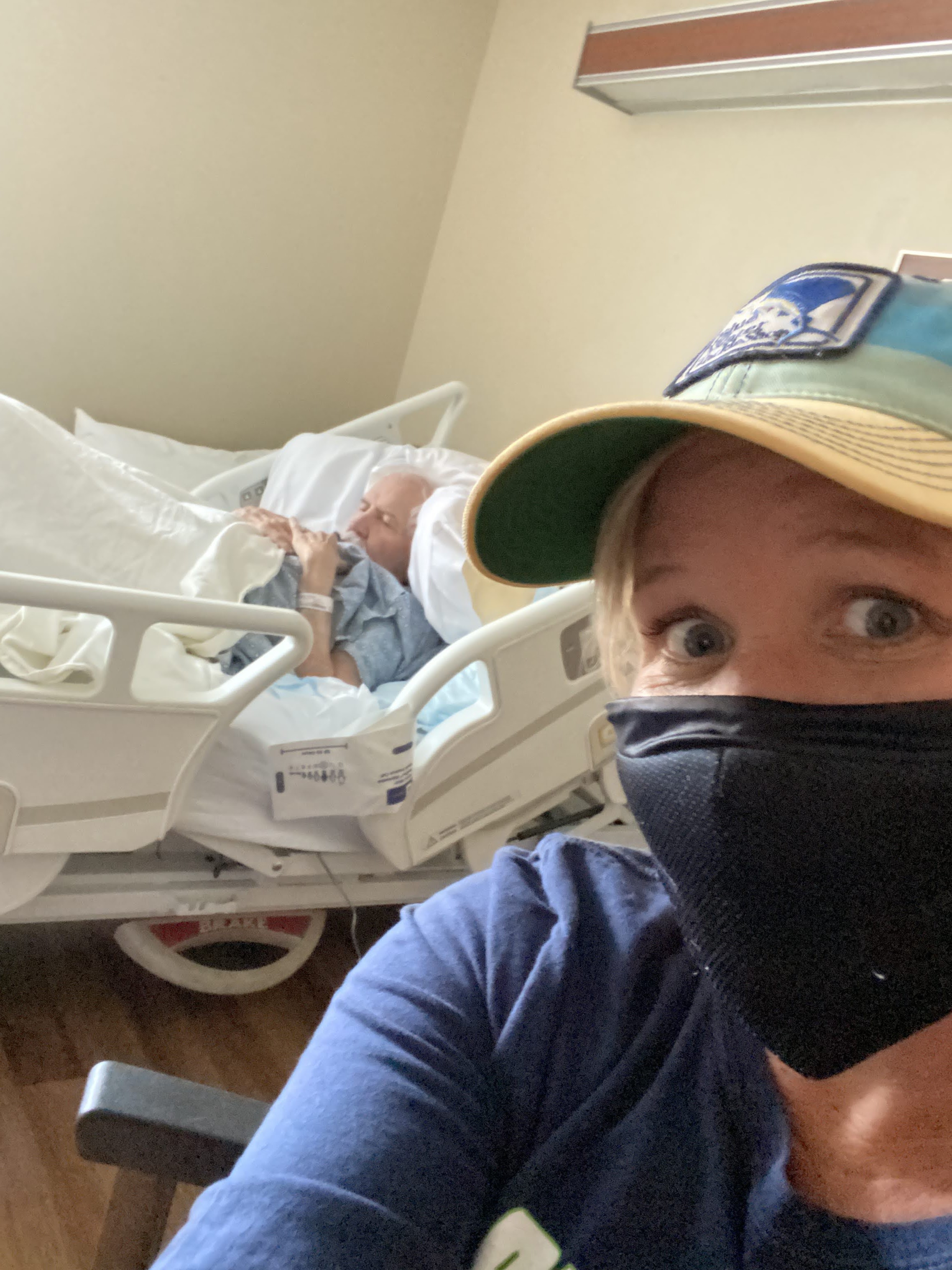
At the hospital with my dad.

No one enjoys taking photos during a difficult time. It isn’t fun to experience the first time around, so you don’t relish going down a visual memory lane later. I feel anxious just seeing the bed, the blood pressure cuff, the bland wall, and my dad lying under a thin blanket in a snap off gown like the one I wore when my children were born. I have this one because I like sending selfies to my teenage kids instead of tediously texting an update: “I’m with Pappaw at the hospital. It’s fine. He’s sleeping. Covid regulations in effect so I have to wear a mask.” Not quite 1000 words, but they get the picture. Pun intended.

We transferred my dad to a rehab facility covered by insurance for at least twenty days. An assessment would be made at the three week mark to determine if insurance would continue coverage. We–my mom, sisters and I–did not know the system and an acquaintance recommended we contact an elder care law firm to help us navigate “the game.” We had a preliminary consultation with a lawyer on Thursday, heard he was being discharged on Friday, registered an appeal on Saturday, prayed on Sunday, and brought him home Monday. The physician believed he was well enough to move on and insurance will not pay 100% for further therapy at that point. The aversion to paying out-of-pocket costs made us move quicker than we should have because if he had stayed, then he could have been transported to either assisted living or a nursing home. Since he returned home, he would not be considered at either place without going through hospitalization again. I’m not sure if it’s strictly Covid-19 protocol related, or the open beds are just that scarce. Because he doesn’t have Long-Term Care insurance, his options were extremely limited as those available are extremely expensive.

How does Long-Term Care insurance work?

To buy a long-term care insurance policy, you fill out an application and answer health questions. The insurer may ask to see medical records and interview you by phone or face to face.

You choose the amount of coverage you want. The policies usually cap the amount paid out per day and the amount paid during your lifetime.

Once you’re approved for coverage and the policy is issued, you begin paying premiums.

Under most long-term care policies, you’re eligible for benefits when you can’t do at least two out of six “activities of daily living,” called ADLs, on your own or you suffer from dementia or other cognitive impairment.

The activities of daily living are:

  • Bathing
  • Caring for incontinence
  • Dressing
  • Eating
  • Toileting (getting on or off the toilet)
  • Transferring (getting in or out of a bed or a chair)

A long-term care insurance policy helps cover the costs of that care when you have a chronic medical condition, a disability or a disorder such as Alzheimer’s disease. Most policies will reimburse you for care given in a variety of places, such as:

  • Your home
  • A nursing home
  • An assisted living facility
  • An adult day care center

Considering long-term care costs is an important part of any long-range financial plan, especially in your 50s and beyond. Waiting until you need care to buy coverage isn’t an option. You won’t qualify for long-term care insurance if you already have a debilitating condition. Most people with long-term care insurance buy it in their mid-50s to mid-60s.

from Nerd Wallet
Photo by Matthias Zomer on Pexels.com

Cost of Long-Term Care Insurance

The rates you pay depend on a variety of things, including:

  • Your age and health: The older you are and the more health problems you have, the more you’ll pay when you buy a policy.
  • Gender: Women generally pay more than men because they live longer and have a greater chance of making long-term care insurance claims.
  • Marital status: Premiums are lower for married people than for single people.
  • Insurance company: Prices for the same amount of coverage will vary among insurance companies. That’s why it’s important to compare quotes from different carriers.
  • Amount of coverage: You’ll pay more for richer coverage, such as higher limits on the daily and lifetime benefits, cost-of-living adjustments to protect against inflation, shorter elimination periods, and fewer restrictions on the types of care covered.

Tennessee has a higher cost of care than several neighboring states, with nursing homes averaging over $200/day, and as high as $240/day in several cities.  The cost in Tennessee for home care and assisted care is approximately half as expensive, but still costly and well above what many could comfortably afford to pay, especially for an extended time period.

http://www.tennltc.com

Who Needs Long-Term Care?

According to Tennessee Long Term Care Insurance Consultants, someone turning age 65 today has about a 70 percent chance of needing some type of long-term care during their lifetime. While one-third may never need long term care, 20 percent will need it for longer than 5 years. The average length of time people need long term care services is 3 years.1

In Tennessee, the average cost for 3 years of long term care is $274,299 ($91,433 per year) at 2020 rates. That cost is projected to be $495,414 ($165,138 per year) in 2040.2

And it’s not only seniors that need long-term care. Over 35 percent of people currently receiving long term care services are between 18 and 64.3

1. 2020 U.S. Department of Health and Human Services (www.longtermcare.acl.gov), site accessed 09/30/2021
2. Cost of Care Survey 2020 (Genworth.com), site accessed 09/30/2021
3. Family Caregiver Alliance (www.caregiver.org), site accessed 09/30/2021

[Excerpt taken from http://www.ltcinsuranceconsultants.com]

Tennessee Long Term Care Partnership Program

The Tennessee Long Term Care Partnership Program is a special Tennessee program combining private long term care insurance with special access to Tennessee’s Medicaid Program (TennCare). The Tennessee Long Term Care Partnership helps Tennesseans prepare for the possibility of needing nursing home care, assisted living care or home care.

A Tennessee Long Term Care Partnership Program policy allows you to keep all, or part of your assets under the Medicaid program, if your long term care needs last longer than the benefits of your Partnership policy. Tennessee Legislature created the Tennessee Long Term Care Partnership under the auspices of several state government agencies.

Tennessee Long Term Care Partnership rates are like other policies. But the mandatory age-related inflation protection can increase the cost of insurance. So we recommend you compare Tennessee Long Term Care Partnership policies with regular LTC insurance. Because, you may find a wider range of choices better suited to your needs. This includes hybrid long term care insurance options not available under the Tennessee Long Term Care Partnership Program.

Happily Ever After – my parents, 1964

The photo above shows two kids, well, young adults at 20 and 23 years old, just married without a care in the world. The groom would be a high school teacher until becoming a licensed life insurance agent a few years later, and the bride would be a stay-at-home mother just a year later (when my oldest sister was born). They couldn’t imagine what the next 55+ years would bring, and despite his training, my insurance salesman father probably couldn’t imagine not having policies in place when he needed them the most. You just never know.

But you can try to prepare.

For your sake and for your family.

The Insecurity of Cyber Technology

With piracy active in digital waters, cyber attacks are on the rise and Cyber Liability Insurance is more important than ever.

The Russians are coming, the Russians are coming! That movie is before my time, but watch the nightly news and it seems Putin and his posse of cyber terrorists are constantly on the attack. Whether he is leading the charge or not, we have seen a dramatic increase in malicious attempts to damage or disrupt computer networks through data breaches, ransomware, fraud and Denial of Service (DoS) attacks. Most people are familiar with computer viruses now and know not to click on a suspicious link emailed to fifty of their closest friends, but rather than a costly appointment with a Geek Squad member, these attacks can be significant. Just last month, we saw what happens when a gas company’s computer system is compromised and held hostage for a short time. What would happen to your company or business if the computer system was taken hostage? What’s at stake?

“Online threats are varied and they don’t discriminate organizations from individuals when looking for a target. . .it’s not an exaggeration to say that cyber threats may affect the functioning of life as we know it.”

from preyproject.com
Photo by Mateusz Dach on Pexels.com

10 Most Common Types of Cyber Threats

[From preyproject.com]

Malware

Software that performs a malicious task on a target device or network, e.g. corrupting data or taking over a system.

Phishing

An email-borne attack that involves tricking the email recipient into disclosing confidential information or downloading malware by clicking on a hyperlink in the message.

Spear Phishing

A more sophisticated form of phishing where the attacker learns about the victim and impersonates someone he or she knows and trusts.

“Man in the Middle” (MitM) attack

Where an attacker establishes a position between the sender and recipient of electronic messages and intercepts them, perhaps changing them in transit. The sender and recipient believe they are communicating directly with one another. A MitM attack might be used in the military to confuse an enemy.

Trojans

Named after the Trojan Horse of ancient Greek history, the Trojan is a type of malware that enters a target system looking like one thing, e.g. a standard piece of software, but then lets out the malicious code once inside the host system.

Ransomware

An attack that involves encrypting data on the target system and demanding a ransom in exchange for letting the user have access to the data again. These attacks range from low-level nuisances to serious incidents like the locking down of the entire city of Atlanta’s municipal government data in 2018.

Denial of Service attack or Distributed Denial of Service Attack (DDoS)

Where an attacker takes over many (perhaps thousands) of devices and uses them to invoke the functions of a target system, e.g. a website, causing it to crash from an overload of demand.

Attacks on IoT Devices

IoT devices like industrial sensors are vulnerable to multiple types of cyber threats. These include hackers taking over the device to make it part of a DDoS attack and unauthorized access to data being collected by the device. Given their numbers, geographic distribution, and frequently out-of-date operating systems, IoT devices are a prime target for malicious actors.

Data Breaches

A data breach is a theft of data by a malicious actor. Motives for data breaches include crime (i.e. identity theft), a desire to embarrass an institution (e.g. Edward Snowden or the DNC hack), and espionage.

Malware on Mobile Apps

Mobile devices are vulnerable to malware attacks just like other computing hardware. Attackers may embed malware in app downloads, mobile websites, or phishing emails and text messages. Once compromised, a mobile device can give the malicious actor access to personal information, location data, financial accounts, and more.

Photo by Magnus Mueller on Pexels.com

What are your cyber liability risks?

If your computer systems are hacked or customer, employee or partner data is otherwise lost, stolen or compromised, the costs of response and remediation can be significant. According to iii.com, your business may be exposed to the following costs:

  • Liability—You may be liable for costs incurred by customers and other third parties as a result of a cyber attack or other IT-related incident.
  • System recovery—Repairing or replacing computer systems or lost data can result in significant costs. In addition, your company may not be able to remain operational while your system is down, resulting in further losses.
  • Notification expenses—In several states, if your business stores customer data, you’re required to notify customers if a data breach has occurred or is even just suspected. This can be quite costly, especially if you have a large number of customers.
  • Regulatory fines—Several federal and state regulations require businesses and organizations to protect consumer data. If a data breach results from your business’s failure to meet compliance requirements, you may incur substantial fines.
  • Class action lawsuits—Large-scale data breaches have led to class action lawsuits filed on behalf of customers whose data and privacy were compromised.

What cyber liability insurance covers

Some standard business insurance policies, such as a Business Owners Policy (BOP), may provide coverage for certain types of cyber incidents and may pay recovery or replacement costs. To extend coverage for a fuller range of cyber liability risks, you will need to purchase a stand-alone cyber liability policy, customized for your business. This type of policy can cover several types of risk, including:

  • Loss or corruption of data.
  • Business interruption.
  • Multiple types of liability.
  • Identity theft.
  • Cyber extortion.
  • Reputation recovery.

Steps to reduce cyber liability risks

  • Installing, maintaining and updating security software and hardware.
  • Contracting with an IT security services vendor.
  • Using cloud computing services.
  • Developing, following and publicly posting a data privacy policy.
  • Regularly backing up data at a secure offsite location.

New Cybersecurity Law in Tennessee Takes Effect July 1, 2021

Friday, May 21, 2021 | 10:28am | tn.gov

NASHVILLE — Tennessee insurance consumers will gain new protections for their personal, medical and financial information with the recent passage by the Tennessee General Assembly of the Insurance Data Security Law. Signed by Tennessee Governor Bill Lee, the law takes effect July 1, 2021.

“Tennessee’s adoption of the bill is critical for the Commissioner and the Department to have the tools they need to better protect Tennesseans’ sensitive consumer information.”

Assistant Commissioner for Insurance, Bill Huddleston.

The law modernizes, defines and toughens existing security measures that Tennessee insurance carriers must take to protect consumer information. Under the new law, insurance carriers must:

  • Identify internal or external threats that could result in unauthorized access, transmission, disclosure, misuse or destruction of consumers’ private information.
  • Develop, implement and maintain an information security program based on its individual risk assessment with a designated employee in charge of the information security program.
  • Investigate any cybersecurity breach and notify the Insurance Commissioner of a cybersecurity event if the licensee is a domiciled insurer or if more than 250 Tennesseans are impacted.

Spearheaded by the National Association of Insurance Commissioners (NAIC), the creation of model legislation that formed the basis for Tennessee’s law was created with the input of national regulators after a succession of data breaches exposed millions of Americans’ personal information. The NAIC made cybersecurity and consumer data protection top priorities. The model legislation was the result of a two year collaborative process that resulted in a model law that could be adopted by various states.

In an effort to raise greater awareness among consumers about cybersecurity, TDCI reminds consumers to familiarize themselves with the NAIC’s Cybersecurity Consumer Protections.

As an insurance consumer, you have the right to:

  1. Know the types of personal information collected and stored by your insurance company, agent or any business it contracts with (such as marketers and data warehouses).
  2. Expect insurance companies/agencies to have a privacy policy posted on their websites and available in hard copy, if you ask. The privacy policy should explain what personal information they collect, what choices consumers have about their data, how consumers can see and change/correct their data if needed, how the data is stored/protected, and what consumers can do if the company/agency does not follow its privacy policy.
  3. Expect your insurance company, agent or any business it contracts with to take reasonable steps to keep unauthorized
    persons from seeing, stealing or using your personal information.
  4. Get a notice from your insurance company, agent or any business it contracts with if an unauthorized person has (or likely has) seen, stolen or used your personal information. This is called a data breach. This notice should:
    • Be sent in writing by first-class mail or by e-mail.
    • Be sent soon after a data breach and never more than 60 days after a data breach is discovered.
    • Describe the type of information involved in a data breach and the steps you can take to protect yourself from identity theft or fraud.
    • Describe the action(s) the insurance company, agent or business it contracts with has taken to keep your personal
    information safe.
    • Include contact information for the three nationwide credit bureaus.
    • Include contact information for the company or agent involved in a data breach.
  5. Get at least one year of identity theft protection paid for by the company or agent involved in a data breach.
  6. If someone steals your identity, you have a right to:
    • Put a 90-day initial fraud alert on your credit reports. (The first credit bureau you contact will alert the other two.)
    • Put a seven-year extended fraud alert on your credit reports.
    • Put a credit freeze on your credit report.
    • Get a free copy of your credit report from each credit bureau.
    • Get fraudulent information related to the data breach removed (or “blocked”) from your credit reports.
    • Dispute fraudulent or wrong information on your credit reports.
    • Stop creditors and debt collectors from reporting fraudulent accounts related to the data breach.
    • Get copies of documents related to the identity theft.
    • Stop a debt collector from contacting you.

To learn more about the protections in your state or territory, contact your consumer protection office at:

Your state or territory’s insurance department at http://www.naic.org/state_web_map.htm.

Questions about your insurance policy or need to file a complaint? Contact the TDCI team at 1-800-342-4029 or 615-741-2218.


Standard Definitions Under This Bill of Rights
Data Breach: When an unauthorized individual or organization sees, steals or uses sensitive, protected or confidential
information—usually personal, financial and/or health information.


Credit Bureau (Consumer Reporting Agency): A business that prepares credit reports for a fee and provides those reports to consumers and businesses; its information sources are primarily other businesses.


Credit Freeze (Security Freeze): A way you can restrict access to your credit report and prevent anyone other than you from using your credit information.


Personal Information (Personally Identifiable Information): Any information about a consumer that an insurance company, its agents or any business it contracts with maintains that can be used to identify a consumer.
Examples include:
• Full name.
• Social Security number.
• Date and place of birth.
• Mother’s maiden name.
• Biometric records.
• Driver’s license number.

Helpful Links:
“Credit Freeze FAQs” (Federal Trade Commission—FTC) – http://www.consumer.ftc.gov/articles/0497-credit-freeze-faqs
“Disputing Errors on Credit Reports” (FTC) – http://www.consumer.ftc.gov/articles/0151-disputing-errors-credit-reports
“Taking Charge: What to Do If Your Identity Is Stolen” (FTC, May 2012). Tri-fold brochure; online PDF; can order bulk
copies at no cost – https://bulkorder.ftc.gov/system/files/publications/pdf-0009-taking-charge.pdf
“Know Your Rights” (FTC) – https://www.identitytheft.gov/know-your-rights.html
“What Is Identity Theft?” (video; FTC) – http://www.consumer.ftc.gov/media/video-0023-what-identity-theft
“When Information Is Lost or Exposed” (FTC) – https://www.identitytheft.gov/info-lost-or-stolen.html
State Consumer Protection Offices (USA.gov) – http://www.usa.gov/directory/stateconsumer/index.shtml
Directory of State Insurance Regulators (NAIC) http://www.naic.org/state_web_map.htm
World’s Biggest Data Breaches (information is beautiful) – http://www.informationisbeautiful.net/visualizations/worlds-biggestdata-breaches-hacks/

22 Questions for Home and Auto Insurance Review

Happy 2021! Look over these 22 questions to review your home and auto insurance for the new year.

Last year brought enough unwelcomed surprises, don’t let home and auto changes negatively affect your insurance coverage. Review the following questions to make sure your policy covers what you need for 2021 and let’s all have a happy, healthy new year!

Photo by Binyamin Mellish on Pexels.com

Have you completed any renovations or additions to your home/property? (Pool, dock, gazebo, deck, fencing, roof or window replacement, other improvements)

Photo by Pixabay on Pexels.com

Do you own any other properties? (Secondary residence, rental property, vacant land, etc.)

Photo by Kenneth Carpina on Pexels.com

Do you have any residence employees? (Nanny, housekeeper)

Photo by Helena Lopes on Pexels.com

Do you have any income producing hobbies or operate a business out of your home? What type ?

Photo by Ksenia Chernaya on Pexels.com

Are you providing any other business services in your home on a regular basis?

Photo by Serpstat on Pexels.com

Are you renting out any part of your home?

Photo by Burst on Pexels.com

Do you have personal property that should be scheduled? (Jewelry, coins, stamps, artwork, collectibles, etc. are limited in coverage on the standard policy – appraisal required.)

Photo by Pixabay on Pexels.com

Is there a trampoline, diving board or unfenced pool on the premises?

Photo by Karolina Grabowska on Pexels.com

Are there any dogs, horses, exotic pets or farm animals on premises?
If yes, what breed(s)?
How many?

Photo by Ave Calvar Martinez on Pexels.com

Do you own or operate any drones or other unmanned aircraft?

Photo by The Lazy Artist Gallery on Pexels.com

Do you participate in AIRBNB or similar home sharing services?

Photo by Andrea Davis on Pexels.com

AUTOMOBILE SECTION

Photo by Mike on Pexels.com

Is every person in your household who holds a driver’s license listed as a driver on your policy?

Photo by JESHOOTS.com on Pexels.com

Is anyone who regularly drives one of your vehicles listed as a driver on the policy?
(A housekeeper or nanny who regularly drives your vehicle)

Photo by Jill Wellington on Pexels.com

Are all vehicles you own listed on your policy?

Photo by Pixabay on Pexels.com

Do you drive any vehicles furnished for your regular use that you do not own?
(Company car)

Photo by Andrea Piacquadio on Pexels.com

Are all the vehicles listed on your policy titled to you and/or your spouse?

Photo by Rene Asmussen on Pexels.com

Are any of the vehicles on your policy customized or altered?

Photo by Erik Mclean on Pexels.com

Are any of the vehicles garaged at a different address?
(i.e. a child at school with a vehicle)

Photo by Andrea Piacquadio on Pexels.com

Are any vehicles used in business, for sales or deliveries?

Photo by Artem Podrez on Pexels.com

Do you own any recreational vehicles or watercraft?

Photo by Matheus Bertelli on Pexels.com

Do you own any motorcycles, mopeds, minibikes or scooters?

Photo by Pixabay on Pexels.com

Do you use your ride sharing programs?

Photo by cottonbro on Pexels.com

GENERAL INFORMATION

Are you interested in learning more about the following protection?

Umbrella Liability
(An additional layer of liability over your home & auto policies)

Flood Insurance
Business Insurance
Life, Health, or Disability Insurance

This list is just the beginning. Review your policy with your agent each year for a thorough check. We’re happy to answer any questions you might have and provide a complimentary review of your home, auto, life, health or commercial insurance policies at Herron-Connell. Give us a call at 865-483-8483.

For the Health of It: Open Enrollment

A few weeks post-op, I am grateful that I was able to change insurance providers to one that covered the procedure I needed. It wasn’t easy.

Quick backstory: I’ve played tennis my entire life, and my mid-forties knees are feeling it. Last December, an MRI revealed the pain wasn’t going to go away on its own and surgery was necessary to replace the damaged cartilage with donor cartilage. (If I were younger, the doctor could’ve taken my own cartilage from somewhere else, but I’m over 35 or whatever the age cut-off is for a healthy transplant.) As most things medical, the procedure is expensive; the donor tissue alone cost $11,000. Yikes. Turned out, the group insurance my husband had through his employer denied coverage, and come to learn, almost every other carrier would cover it. Unfortunately, we were a couple of weeks past the current plan’s renewal date and were stuck with it. No way could we afford to pay for the surgery without insurance, so I was out of luck.

Until March, when a pharmaceutical company purchased one of the drugs my husband sold and he was technically a new employee, thereby permitted to change his health plan. Six months later, delayed by reasons other than insurance, I finally got to have my knee repaired. Hitting the max out-of-pocket in the last quarter of the year stings a little, but you do what you have to do when you get the chance to do it, right? I have much to learn, yet, but thought I’d share some facts regarding Tennessee Health Insurance since we are coming up on Open Enrollment for 2021.

Open Enrollment is the annual period during which you can enroll in a new health insurance plan for the coming year. If you’re an employee eligible for insurance through your employer, Open Enrollment is the period during which you can sign onto your company’s insurance policy or switch to a different policy. Though you can usually drop your coverage at any point in the year, you may only sign onto a new plan during the Open Enrollment window.

If you find yourself in a position similar to mine, you may qualify for a special enrollment period with a qualifying event, such as:

  • Changes in your household: marriage or divorce; a new baby or adoption; the death of a spouse in the last 60 days; a significant increase or decrease in salary.
  • Changes in your residence: moving into a new zip code or from transitional to permanent housing.
  • Loss of coverage: anyone in the household lost coverage within the past 60 days or anticipates losing coverage in the next 60 days, like a child being removed from a family policy at age 26 when they no longer qualify.
  • Other qualifying life events: leaving incarceration, gaining residency or citizenship status or gaining membership in a federally-recognized tribe.

Open enrollment for 2021 health plans will run from November 1 – December 15, 2020. Residents with qualifying events can still enroll or make changes to their coverage for 2020.

from healthinsurance.org

When we were looking through all the different options, we had no idea what we were looking for beyond in-network and out-of-network. We had a general understanding of key words, but didn’t know how these terms translated into dollars. Depends on the specific code and charges billed by different providers and is therefore, a bit of a crap shoot, to be blunt. Familiarize yourself with these terms as defined by Benzinga:

  • A premium is a monthly fee paid to the insurance company to keep your policy active. 
  • You pay out of pocket for a deductible before your insurance coverage kicks in. All insurance plans have different deductibles. A lower deductible means you’ll pay a higher premium each month. Some insurance plans have no deductible at all. 
  • A copay is a flat fee you pay each time you go to the doctor or get a prescription filled. It’s important to note that your copay does not go toward meeting your deductible. 
  • Coinsurance is a percentage that is shared between you and the insurance company. Some common coinsurance amounts:
    • 80/20, where the insurance company pays 80% of the cost and you pay 20%
    • 70/30, where the insurance company pays 70% and you pay 30%

Residents of Tennessee pay an average of $7,372 per year on health insurance, according to the Kaiser Family Foundation. That’s a few hundred dollars below the national average.

from Benzinga.com

It’s helpful to note the following factors will raise your costs, so avoid the ones you can control (diet, exercise, tobacco):

  • Body mass index: A high body mass index (BMI) can cause certain negative health conditions, including diabetes and heart disease. Insurance companies use BMI as one of the many factors to assess your risk level and how much you’ll pay for insurance. 
  • Tobacco use: Smokers pay more for health insurance. Nearly 23% of Tennessee residents smoke — this is the fourth-highest number in the country. 
  • Age: Older people generally have more health conditions, so you may pay as much as 3 times more if you’re a senior citizen.

Generally speaking, health insurance plans cover treatment for illnesses and injuries but also cover preventive care like health screenings and vaccinations. There’s often no cost associated with preventive services. What’s covered and not covered will depend on your plan, but core benefits are normally the same across all health insurance plans.

What Does Health Insurance Cover?

  • Ambulance services 
  • Emergency services 
  • Hospitalization
  • Newborn and maternity care
  • Prescription drugs
  • Rehabilitative services
  • Laboratory services 
  • Mental health care
  • Wellness checks
  • Pediatric care

What Does Health Insurance not Cover? 

Health insurance covers a majority of the costs associated with the treatment of illnesses or injuries but there are some things that insurance companies do not cover.

  • Elective or cosmetic procedures, like weight-loss surgery or plastic surgery
  • Long-term nursing home care
  • Infertility treatments
  • LASIK (laser surgery to improve vision)
  • Alternative therapies
  • Dental, vision and hearing
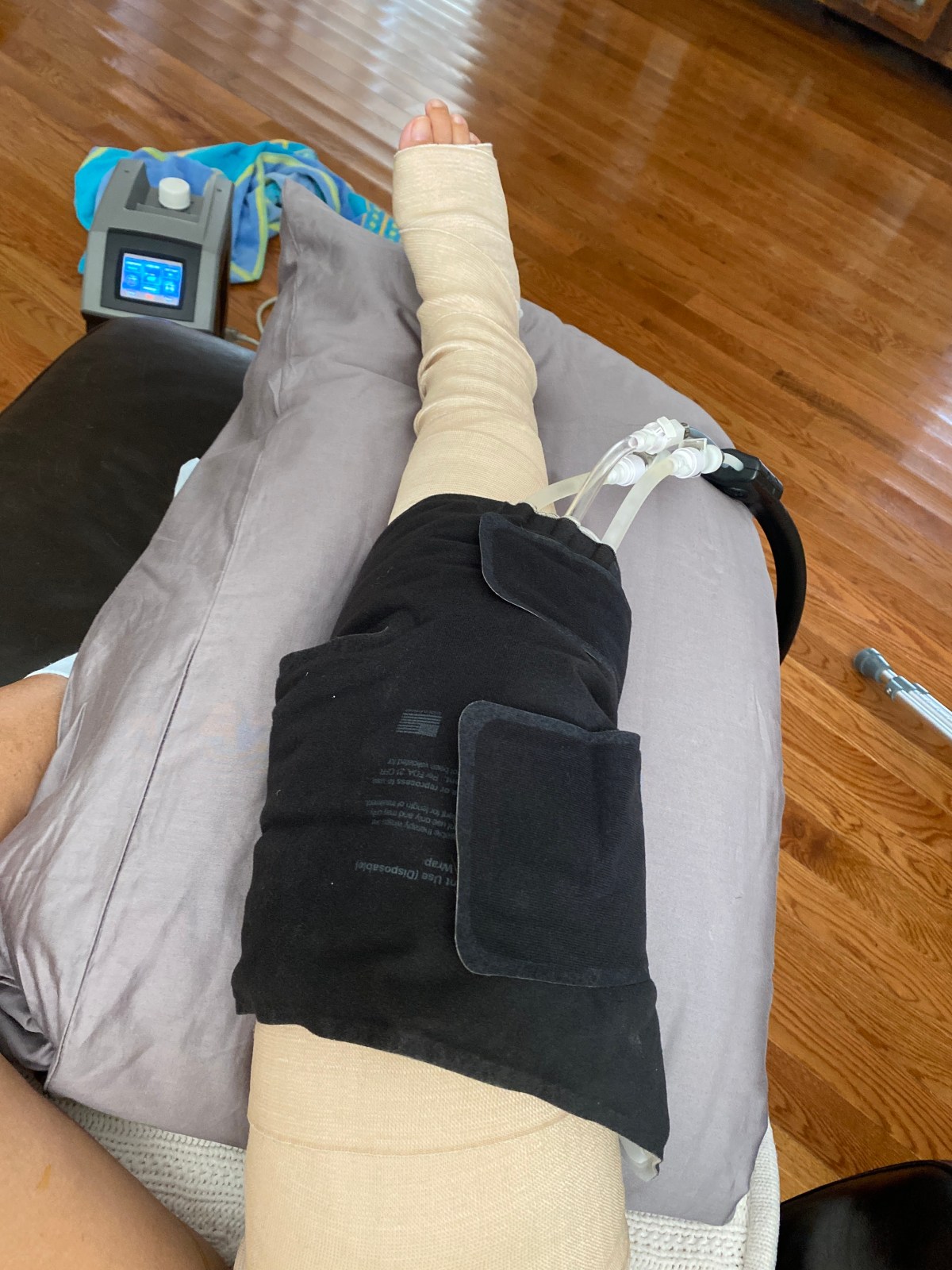
As I lay recovering…

Before I go down the rabbit trail of HMOs, PPOs, HSAs and more, I will leave you here and go ice my knee. Be well and take care of yourselves, friends.

11 Tips from a Pro

Insurance can be confusing–have enough, too much or even need it at all?

I am constantly learning from Cyndi Jeffers, CIC, and thought you might also. She has answered thousands of questions over her 30+ year career, but we don’t have enough time or space to cover them all today. We’ll start with the following 11 points to clear up some common misconceptions about different types of insurance.

  • PRO TIP: When shopping for insurance coverage, make sure you compare apples to apples. You get what you pay for with insurance, and a lower premium can be an indicator that some of the coverages you had are no longer there, or that the agent didn’t input your information correctly (which could result in denial of a claim).

  • How much liability insurance coverage do I really need? Purchase enough coverage to protect your assets. If you own a business, and it’s not an LLC or corporation, include the business assets in the total and make sure your business liability is enough to protect your business and personal assets.

  • When should I add Long Term Care? Long Term Care insurance is not just for the elderly – a bad accident or a debilitating disease can affect a person of any age.

  • PRO TIP: Take responsibility for maintaining your home. Most things that happen are caused by lack of maintenance, and insurance doesn’t cover that.

  • PRO TIP: Drive defensively – don’t assume the other driver knows what they’re doing. Most auto accidents are caused by distracted drivers.

  • What’s the difference between Market Value and Tax Appraisal? Property insurance is not based on market value or tax appraisal. Market value is a reflection of what someone is willing to pay for a property; tax appraisal is typically based on market value, a set millage rate, and a tax rate. Neither market value or tax appraisal are good indicators of what it would cost to rebuild your home or business building as it stands now – that’s what insurance is for.

A millage rate is the tax rate used to calculate local property taxes. It represents the amount per every $1,000 of a property’s assessed value. Assigned millage rates are multiplied by the total taxable value of the property in order to arrive at the property taxes.

from investopedia.com

  • When should I contact my agent? Major changes should always be reported to your agent! It’s not about possibly raising your premium – it’s about continuing to pay premium for a policy that may no longer fit the situation and therefore may not provide coverage in the event of a loss.

  • Can I use my personal auto insurance for my company vehicle? If you use a personal vehicle for business, be sure your agent is aware of it – there is only limited coverage for business use on a personal auto policy. If you have an advertising sign on your vehicle or you have employees who drive your vehicle, it’s time for a commercial auto policy.

  • I just wrecked my car. Who do I call first? Before you call the 800 number to file a claim, contact your agent to discuss what happened. People often panic and call the insurance company, setting up a chargeable claim when maybe the damage is less than the deductible, the other person’s insurance is responsible, or you find it’s a maintenance issue not covered by insurance. Your agent is there to help you!

  • Can I change the type of roof on my house that was damaged by a storm? The basic purpose of insurance is to put things back the way they were before the loss occurred – it’s not meant to provide additional benefits. If you didn’t have a metal roof on your home before the hail storm, you will not have one after the claim is settled (unless you pay the additional cost yourself).

  • PRO TIP: If you know of someone who committed insurance fraud, report them – their actions are affecting everyone, including you!  

Insurance fraud is a major factor in insurance premium increases. Property & casualty insurance companies lose approximately $34 billion a year to insurance fraud, while as much as $259 billion was paid out as a result of healthcare fraud in 2010 alone. In addition, the cost of combating fraud is also passed on to the consumer. Insurance fraud takes many forms and is committed by insureds, contractors, healthcare professionals, etc.

Whatever Floats Your Boat

The more your boat is worth, the more important insurance becomes to protect yourself from financial loss.

You can’t buy happiness. But you can buy a boat and that’s about the same thing.

Too many sources to credit

In East Tennessee, our lakes are usually crowded with teenagers jet-skiing, fishermen fishing, friends sailing, families cruising and debris floating. After the deluge of rain this past spring, boats and skiers are still dodging flotsam and jetsam throughout the river. Most boaters know that sinking feeling when a propeller wrestles with a log, but did you know that boat protection can help cover the cost of repairs? If you have comprehensive insurance or property damage coverage built into your watercraft policy, your boat insurance will cover collision with rocks, logs, and other marine obstacles.


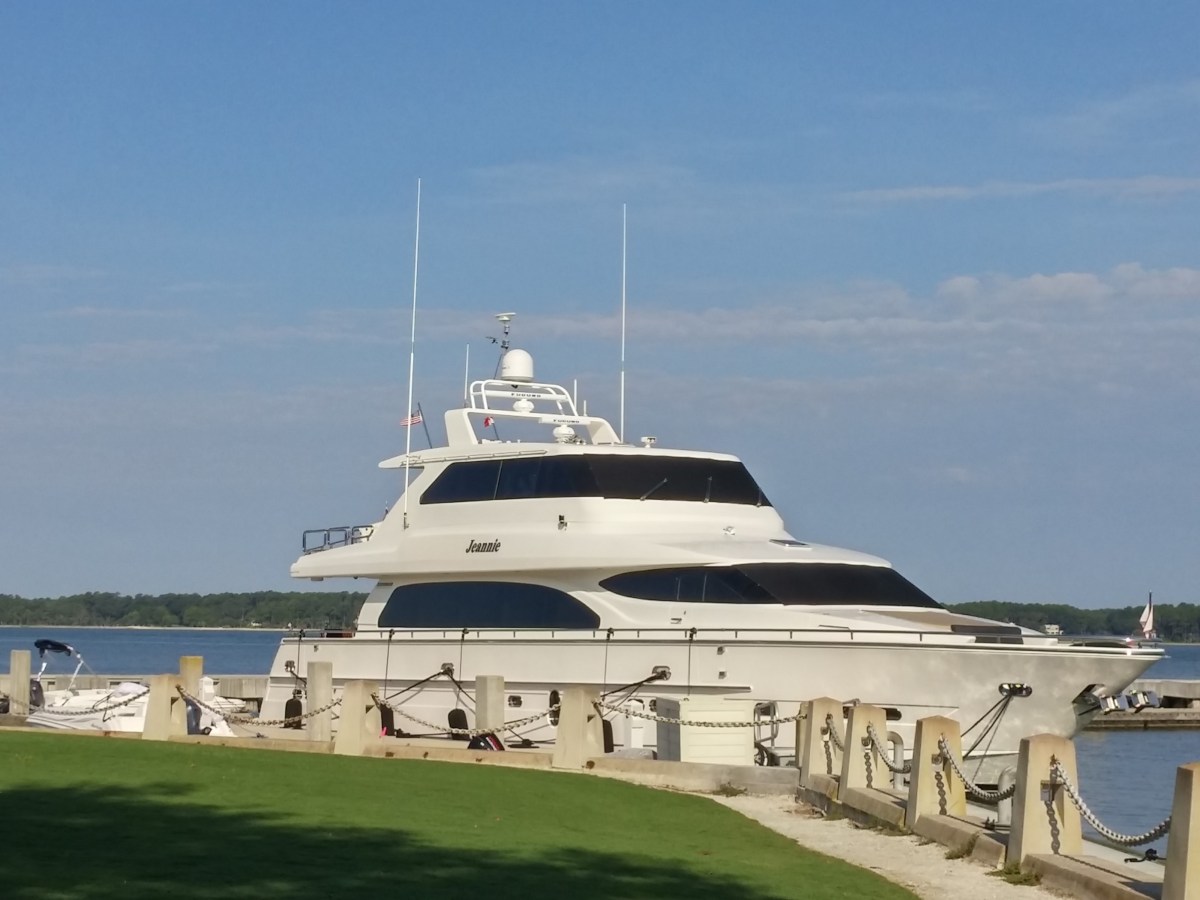
It’s not like I own a yacht, why would I need a watercraft policy?


The amount of boat insurance you need depends on a number of factors, including the boat’s value, motor size, age, and how it’s used. In general, most professionals recommend buying at least $1,000,000 in liability insurance, with boat insurance ranging anywhere from as little as $75 to as much as $500 per year. For uninsured/underinsured motorists coverage, a typical minimum is $10,000 to cover losses in the event someone without insurance is at fault in an incident on the water. The amount you purchase is flexible and should reflect the potential injuries you may incur if you or one of your passengers is seriously hurt, or your vessel is damaged. For example, a brand new high performance speed boat will need more coverage for bodily injury and property damage liability than a low-risk, slow-moving pontoon.

Boater’s insurance typically covers:

  • Collision damage: Covers repairs or replacement in the event that your boat is damaged in an accident.
  • Property damage liability: Should you damage someone else’s boat or property, then this will keep you covered.
  • Bodily injury liability: In the event that you should injure someone while operating your boat, this helps protect your assets.
  • Comprehensive: If your boat is stolen, vandalized, or damaged in a non-collision manner, your comprehensive provides compensation.
Men have a tendency to forget their age on the water and take all sorts of risks.

In the event that your boat’s wake causes damage to another watercraft or capsizes another boat, you would be responsible and could be held liable for damages. Don’t be caught off-guard, take out a boat insurance policy.

So, what does my Homeowner’s policy cover?

A home insurance policy provides limited coverage for your boat or watercraft should it be damaged, stolen or vandalized. In most policies, you would only be reimbursed up to $1,000 worth of coverage if your boat, jet ski or miscellaneous water craft is broken or damaged by the following: fire, wind, explosion, hail, theft, vandalism or falling objects. Since homeowner’s policies can have deductibles either greater than or close to $1,000, most claims would not make sense to file.

When it comes to hail damage, there is a peculiar provision in which the watercraft must be in an enclosed building for the damage to qualify. For example, if a hailstorm causes damage to a boat stored outside, you wouldn’t be able to file a homeowners claim in that case. But if the building or storage enclosure has glass that gets shattered and hail comes through that damages your boat, then you would be covered.

Personal Property

If you have items on your boat that are stolen or destroyed, you can likely use your homeowner’s insurance to recoup those losses. For example, your homeowner’s policy would cover your portable Bose speaker, but high-priced modifications and equipment exclusive to your boat should be covered under a boat insurance policy. Therefore, always carefully review the comprehensive coverage of your policy to determine exactly what is and is not covered. You may need to purchase additional riders, or policy endorsements.

Captains and vessels come in all sizes.

If you injure someone or damage property with your watercraft, the homeowner’s liability policy can help cover any associated cost. These policies come with at least $100,000 in liability coverage you can use for legal expenses or restitution to pay the affected party. There are some important size and horsepower limitations when it comes to boats however. Generally the boat needs to be very small, and in no case will your jet ski be covered. To get more robust coverage for your boat or watercraft you should take out a boat or personal water craft (PWC) insurance policy.

Vessel/Motor TypeWhen is it Covered by Liability Insurance?
Inboard or Inboard-OutdriveLess than 50 HP
OutboardLess than 25 HP
SailboatSmaller than 26 feet
Jet SkisNever
Air boatsNever
From valuepenguin.com

Whether you’re spending every day on the water or have your boat in storage for the winter, it’s important to keep your watercraft protected against the unexpected year-round. Coverage is not required by law, with the exception of Arkansas and Utah, but your lien holder and/or marina where you dock may have requirements. An agent can help answer your questions, but you can also learn about the coverage types below:

  • Watercraft medical payments coverage
    Helps pay medical costs if you or anyone on your boat is injured in an accident.
  • Watercraft liability coverage
    If there’s an accident, this covers the medical and other expenses of whoever was injured as well as the costs of repairing or replacing another person’s boat or property.
  • Property coverage
    Covers the damage to your boat if you’re involved in an accident with another boat or something else, like a pier, buoy, dock or debris. It also typically pays for damage caused by something other than a collision, such as theft, fire or vandalism.
  • Repair cost
    Covers the repair work done on your boat, motor, equipment or trailer with no deduction for depreciation*.
  • Emergency services
    If your boat breaks down, this covers the cost of towing and labor and the cost of delivering fuel, oil or a battery.
  • Uninsured watercraft coverage
    If you’re in an accident with an uninsured boater, this helps pay for injuries that you, your family or anyone else on your boat sustains.
  • Agreed value option
    When you’re reimbursed for your boat’s value, you’ll be reimbursed for what it was worth at the start of the policy regardless of the current market value.
  • Personal effect coverage
    Covers your fishing equipment and other personal belongings if they’re damaged, lost or stolen.
  • Additional boat equipment
    Covers boat accessories, like anchors, life jackets and navigation gear, up to the policy limits.
  • Boat trailer coverage
    Covers damages to your trailer resulting from an accident or other unforeseen incident.
Have fun on the water and be safe out there!

Introducing…

Herron-Connell Insurance Group is firmly planted and proudly rooted in East Tennessee since 1945.

Picture it–not Sicily, but Oak Ridge, 1945.

The Manhattan Project is no longer top-secret and WWII comes to a victorious end. Honorably discharged from military service, Mr. Herron opens an independent agency with Mr. Connell, aptly named Herron-Connell Insurance.

Same company, fifty years later: Father & son, Steve & Addison Koella, buy the agency and continue the longstanding family tradition of providing personal, commercial, health and life insurance coverage from more than 40 different carriers to the people of Oak Ridge, Anderson, Knox and other counties. Red Williams’ agency joins the family in 2005; O’Kain & Clark in 2015; then Jim Condra & Employee Benefit Solutions of Tennessee come along in 2017.

Herron-Connell Insurance Group is firmly planted and proudly rooted in East Tennessee since 1945.

665 Suite A Emory Valley Road
Oak Ridge, Tennessee 37830
865-483-8483

We offer the same digital services as national companies through our website, social media and a new, free app. If technology isn’t your thing or you prefer to sit and discuss options, we are just down the road. We will be socially distancing for a bit longer, so the office is currently closed to the public, but we are here. As Mike said the other day, this is not the new normal. We look forward to returning to the old normal of hugs and handshakes. Meanwhile…


“Prepare the umbrella before it rains.”

a translation of a Malayan proverb: Sediakan payung sebelum hujan.

In Tennessee, we say, “Grab an umbrella just in case. Better safe than sorry.”

That’s what insurance is. You hope for the best and prepare for the worst. We are here to help you every step of the way, through all sorts of weather. We also say, “If you don’t like the weather, wait ten minutes and it’ll change.”

We saved the best for last!

Meet our agents and the heart of Herron-Connell Insurance Group:

From top left: Billie Layfield, Mike Clark, Frannie Hamrick Middle row: Katie Rymer, Steve Koella, Cyndi Jeffers Bottom row: Susan Anderson, Dan Brown and Hugh Neil.

Herron-Connell Insurance Group
Herron-Connell President, Addison Koella, and his wife, Jennifer Koella, CIO.