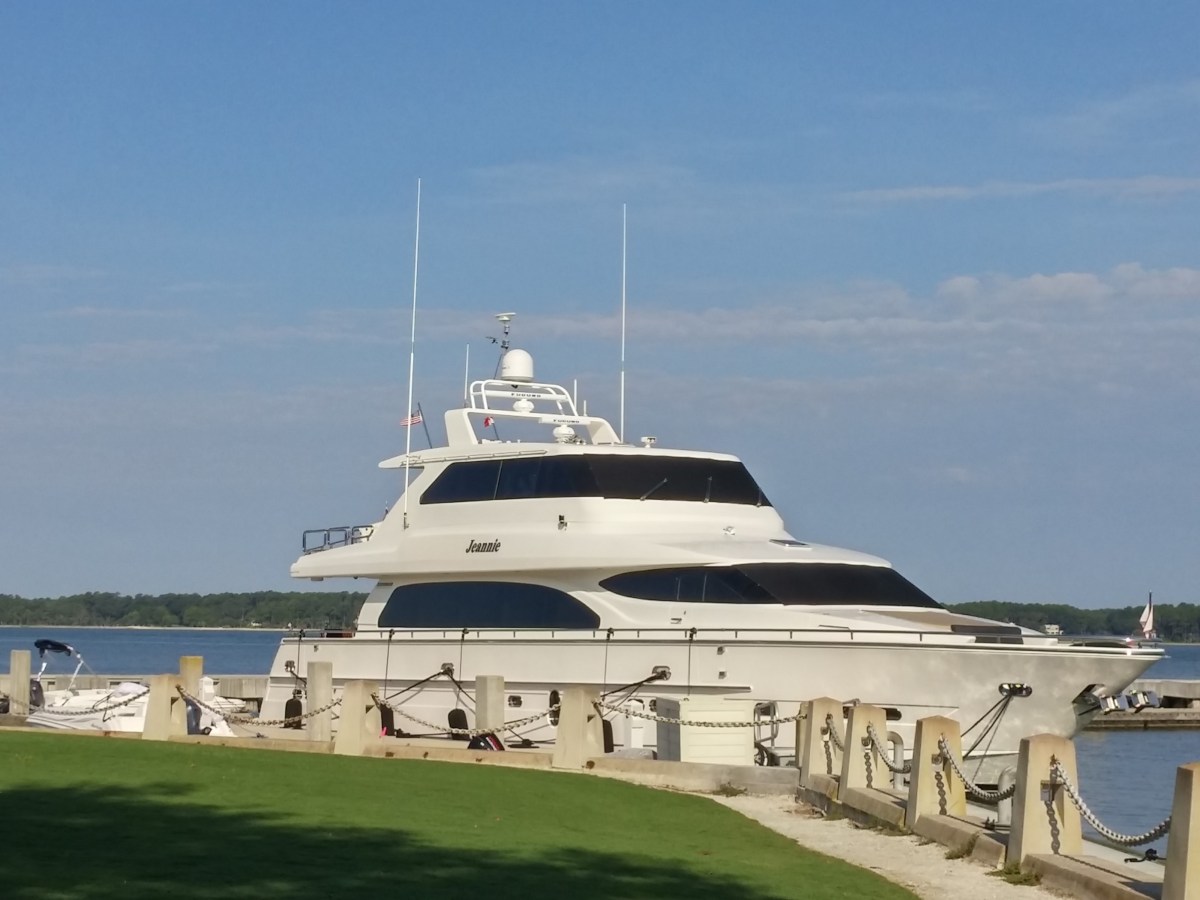
Whatever Floats Your Boat

The more your boat is worth, the more important insurance becomes to protect yourself from financial loss.

You can’t buy happiness. But you can buy a boat and that’s about the same thing.

Too many sources to credit

In East Tennessee, our lakes are usually crowded with teenagers jet-skiing, fishermen fishing, friends sailing, families cruising and debris floating. After the deluge of rain this past spring, boats and skiers are still dodging flotsam and jetsam throughout the river. Most boaters know that sinking feeling when a propeller wrestles with a log, but did you know that boat protection can help cover the cost of repairs? If you have comprehensive insurance or property damage coverage built into your watercraft policy, your boat insurance will cover collision with rocks, logs, and other marine obstacles.


It’s not like I own a yacht, why would I need a watercraft policy?


The amount of boat insurance you need depends on a number of factors, including the boat’s value, motor size, age, and how it’s used. In general, most professionals recommend buying at least $1,000,000 in liability insurance, with boat insurance ranging anywhere from as little as $75 to as much as $500 per year. For uninsured/underinsured motorists coverage, a typical minimum is $10,000 to cover losses in the event someone without insurance is at fault in an incident on the water. The amount you purchase is flexible and should reflect the potential injuries you may incur if you or one of your passengers is seriously hurt, or your vessel is damaged. For example, a brand new high performance speed boat will need more coverage for bodily injury and property damage liability than a low-risk, slow-moving pontoon.

Boater’s insurance typically covers:

  • Collision damage: Covers repairs or replacement in the event that your boat is damaged in an accident.
  • Property damage liability: Should you damage someone else’s boat or property, then this will keep you covered.
  • Bodily injury liability: In the event that you should injure someone while operating your boat, this helps protect your assets.
  • Comprehensive: If your boat is stolen, vandalized, or damaged in a non-collision manner, your comprehensive provides compensation.
Men have a tendency to forget their age on the water and take all sorts of risks.

In the event that your boat’s wake causes damage to another watercraft or capsizes another boat, you would be responsible and could be held liable for damages. Don’t be caught off-guard, take out a boat insurance policy.

So, what does my Homeowner’s policy cover?

A home insurance policy provides limited coverage for your boat or watercraft should it be damaged, stolen or vandalized. In most policies, you would only be reimbursed up to $1,000 worth of coverage if your boat, jet ski or miscellaneous water craft is broken or damaged by the following: fire, wind, explosion, hail, theft, vandalism or falling objects. Since homeowner’s policies can have deductibles either greater than or close to $1,000, most claims would not make sense to file.

When it comes to hail damage, there is a peculiar provision in which the watercraft must be in an enclosed building for the damage to qualify. For example, if a hailstorm causes damage to a boat stored outside, you wouldn’t be able to file a homeowners claim in that case. But if the building or storage enclosure has glass that gets shattered and hail comes through that damages your boat, then you would be covered.

Personal Property

If you have items on your boat that are stolen or destroyed, you can likely use your homeowner’s insurance to recoup those losses. For example, your homeowner’s policy would cover your portable Bose speaker, but high-priced modifications and equipment exclusive to your boat should be covered under a boat insurance policy. Therefore, always carefully review the comprehensive coverage of your policy to determine exactly what is and is not covered. You may need to purchase additional riders, or policy endorsements.

Captains and vessels come in all sizes.

If you injure someone or damage property with your watercraft, the homeowner’s liability policy can help cover any associated cost. These policies come with at least $100,000 in liability coverage you can use for legal expenses or restitution to pay the affected party. There are some important size and horsepower limitations when it comes to boats however. Generally the boat needs to be very small, and in no case will your jet ski be covered. To get more robust coverage for your boat or watercraft you should take out a boat or personal water craft (PWC) insurance policy.

Vessel/Motor TypeWhen is it Covered by Liability Insurance?
Inboard or Inboard-OutdriveLess than 50 HP
OutboardLess than 25 HP
SailboatSmaller than 26 feet
Jet SkisNever
Air boatsNever
From valuepenguin.com

Whether you’re spending every day on the water or have your boat in storage for the winter, it’s important to keep your watercraft protected against the unexpected year-round. Coverage is not required by law, with the exception of Arkansas and Utah, but your lien holder and/or marina where you dock may have requirements. An agent can help answer your questions, but you can also learn about the coverage types below:

  • Watercraft medical payments coverage
    Helps pay medical costs if you or anyone on your boat is injured in an accident.
  • Watercraft liability coverage
    If there’s an accident, this covers the medical and other expenses of whoever was injured as well as the costs of repairing or replacing another person’s boat or property.
  • Property coverage
    Covers the damage to your boat if you’re involved in an accident with another boat or something else, like a pier, buoy, dock or debris. It also typically pays for damage caused by something other than a collision, such as theft, fire or vandalism.
  • Repair cost
    Covers the repair work done on your boat, motor, equipment or trailer with no deduction for depreciation*.
  • Emergency services
    If your boat breaks down, this covers the cost of towing and labor and the cost of delivering fuel, oil or a battery.
  • Uninsured watercraft coverage
    If you’re in an accident with an uninsured boater, this helps pay for injuries that you, your family or anyone else on your boat sustains.
  • Agreed value option
    When you’re reimbursed for your boat’s value, you’ll be reimbursed for what it was worth at the start of the policy regardless of the current market value.
  • Personal effect coverage
    Covers your fishing equipment and other personal belongings if they’re damaged, lost or stolen.
  • Additional boat equipment
    Covers boat accessories, like anchors, life jackets and navigation gear, up to the policy limits.
  • Boat trailer coverage
    Covers damages to your trailer resulting from an accident or other unforeseen incident.
Have fun on the water and be safe out there!

Get a C.L.U.E. if you know what’s good for you.

Lying on your insurance application is never okay.

You may be wondering: What’s the clue, then?

C.L.U.E. is also known as a Loss History Report and reports an insured’s history of claims and losses on their home or auto within seven years from the date of the request. Each month, participating homeowners and auto insurance companies report claims history information, which goes into a central database called the Comprehensive Loss Underwriting Exchange (C.L.U.E.). How is knowing this good for you? One: you can order your own report to verify its accuracy and keep track of your records. Two: the report is used by insurers to help prevent fraud when applicants fudge their record and mess with the fluctuation of premiums.

Under the Fair and Accurate Credit Transaction Act (known as FACT or FACTA), you are entitled to receive one free C.L.U.E. Auto and C.L.U.E. Personal Property report every 12 months. More than one will cost $19.95.

C.L.U.E. Reports are linked to the individual, not the property or car, so it only includes the history of personal property or auto insurance losses of a single owner, and only information concerning the insurance policy.

What’s in the report?

  • The name of the insurance company
  • The date of any losses and claims
  • The type of loss—fire, wind damage, etc.
  • Whether or not the claim was denied
  • If not denied, the amount that the insurer paid out
  • The homeowner’s insurance policy number and claim number

What’s not in the report?

  • Legal judgments
  • Criminal records
  • Civil lawsuits
  • Credit reports
  • Information from any state department (i.e. DMV) or a similar organization
  • Sensitive or private information, such as a Social Security number or credit card information

If you find any inaccuracies on your home’s C.L.U.E. report, you can contact LexisNexis to resolve the dispute at 888-497-0011, by email at consumer.documents@LexisNexis.com, or by postal mail at LexisNexis Consumer Center, ATTN: FACT Act Dispute Request, P.O. Box 105108, Atlanta, GA, 30348.


Photo by Andrea Piacquadio on Pexels.com

We get it. You’ve made mistakes–we all have–but do not compound your troubles by lying on your insurance application. I remember, as a new mom, answering questions on the life insurance form and my husband being so frustrated with me because I took each question seriously. Signing a legal document strikes a fear in me not unlike swearing on the Bible to tell the whole truth and nothing but the truth. It baffles me that people can outright lie, though I also haven’t been in a situation where my life or a great deal of money depended on it, so judge not and all… but, in the matter of insurance, other people’s lives and a great deal of money do depend on telling the truth. Withholding information or intentionally making misrepresentations is fraud.

“Taking creative liberties on your insurance application may seem like an innocent white lie, but it’s actually considered fraud, and the repercussions can be serious. If found out you may be charged a higher premium, denied a policy or even charged with fraud, requiring you to pay a fine or even do jail time.”

Finder’s consumer advocate Rachel Dix- Kessler.

The nice folks at insurancehotline.com listed six possible consequences of being dishonest with your insurance company:

1. Your insurance policy could be cancelled

If your policy is cancelled, you’ll likely have to pay more to get a new policy elsewhere. Policy cancellation for non-disclosure puts you in a high-risk category. Being in a high-risk insurance category automatically makes it harder for you to get new insurance. 

2. Your claim will be denied

Let’s say you tell your insurance company that you don’t drive your car to work every day, but you really have a 50-kilometre commute each way. If you’re in an accident while on the commute, the company may deny your claim because you didn’t tell them the truth about your daily driving.

3. Your insurance premiums will go up

Insurance companies provide policies and charge premiums based on the information you, ideally, truthfully provide. If you drive a lot or have had accidents in the past, this increases your risk for a future accident. If you didn’t disclose problems in the past and the company learns of them, your premiums will go up, because the company will have a more accurate picture of your potential risk.

4. You could be denied car insurance in the future

When you’re dishonest with your car insurance company and they discover it, whether it’s because of a claim you make or other means, it’s more serious than if you told the company from the beginning that you’d had an accident or tickets. 

The insurer is within its rights to deny your car insurance in the future.

5. You could face fines and penalties

You may have to pay money to your insurance company or receive a fine under your province’s insurance regulations. The amounts vary, but if a claim was paid under fraudulent circumstances, you could be held financially responsible for it. An insurance company can sue you to recover costs and damages under Canadian law.

6. You could face criminal penalties

A false insurance claim can lead to jail, substantial fines, and a permanent criminal record. 


Common Omissions (from Investopedia)

These may result in a lost policy, inability to get new coverage, fines, a legal order to pay back premiums—or even jail time. Do not try this at home.

Accidents or tickets

This is the easiest thing for insurers to look up, regardless of what state you live in. The fender bender you sustained on the West Coast did not vanish from databases when you moved to New Jersey. Although that speeding ticket you got may seem like ancient history, the insurance carrier isn’t likely to sympathize.

The primary driver

Typically, this involves a parent claiming to be the one who uses the insured car the most, when in reality it is his college-age son. Young men have high premiums because they get in more accidents and are bigger risks.

The number of miles you drive

The more time a car spends on the road, the greater the likelihood it will be involved in an accident. Often, a motorist will claim the daily commute is shorter than it really is. That can make explaining what happened more difficult when you smash up the auto a greater distance from home.

How you use the car

Let’s say you use your car for work—delivering pizzas or hauling tools to make home repairs. But you tell the insurer that the vehicle is solely for shopping and recreation. When you get in a wreck on the interstate and the police report notes the dozens of pizza pies splattered all over the car’s interior, it doesn’t look good to the insurance company investigating your claim.

Where you actually live

If your home is in a high-crime area or big city, you might be inclined to list your sister’s address as yours. She lives in a peaceful suburb, which statistics show has a lower chance of a car being stolen or damaged. That lie is very easy to disprove.


Some 35 million Americans say they’ve played fast and loose with the facts when applying for insurance, with a whopping 6.5 million (29%) of these lies told on car insurance applications. Health insurance fibs take second place at 6 million (27%) lies, followed by life insurance at 3.2 million (14%).

Type of insurance% of liesEstimated total insurance lies
Car insurance29.30%6,518,166
Disability insurance5.10%1,133,594
Health insurance27.39%6,093,068
Home insurance11.46%2,550,587
Income protection3.18%708,496
Life insurance14.65%3,259,083
Pet insurance3.18%708,496
Renters insurance2.55%566,797
Travel insurance3.18%708,496
Statistics from finder.com 2018

Now that you know what’s good for you, don’t be CLUEless.

And be honest.