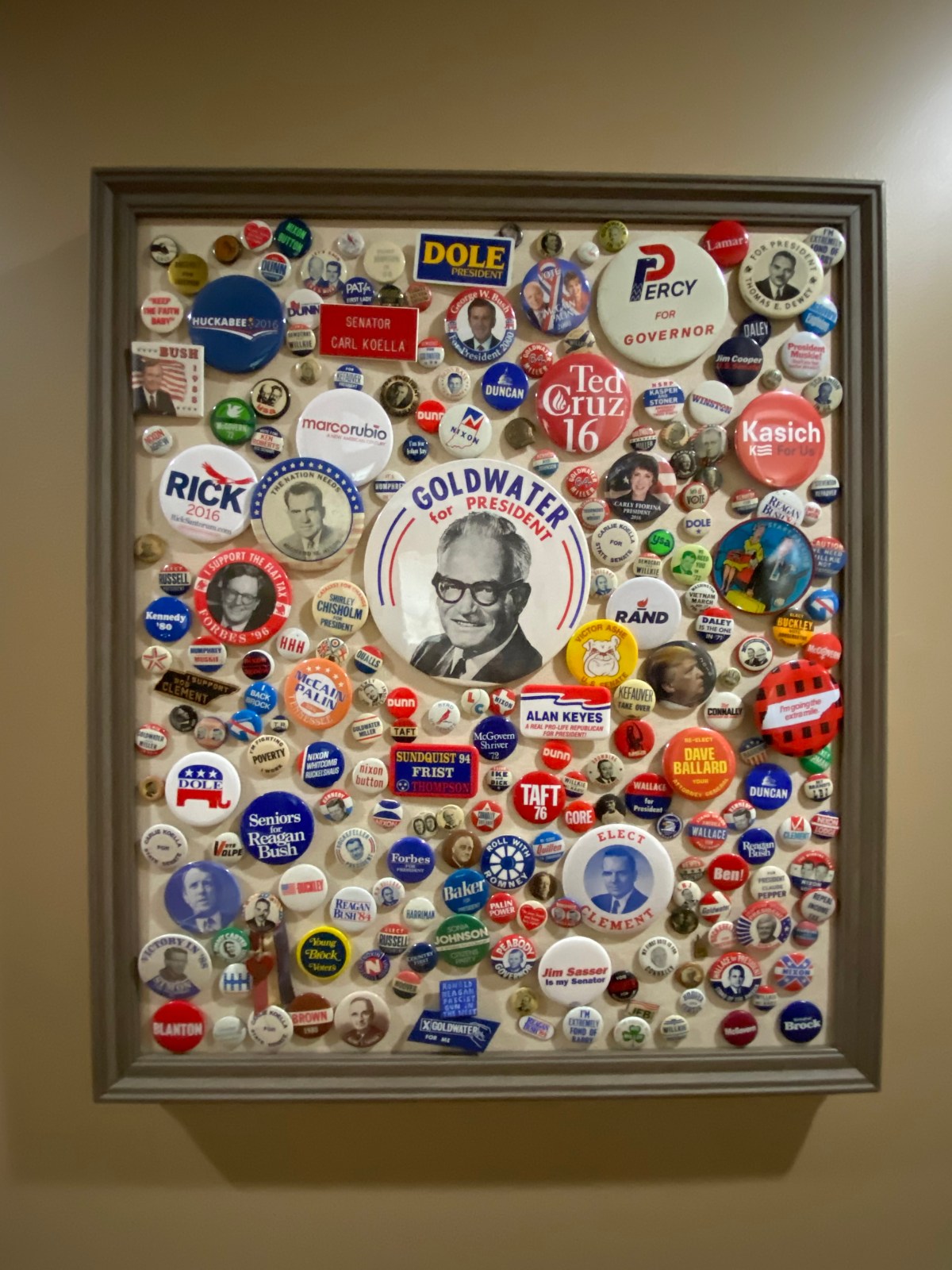
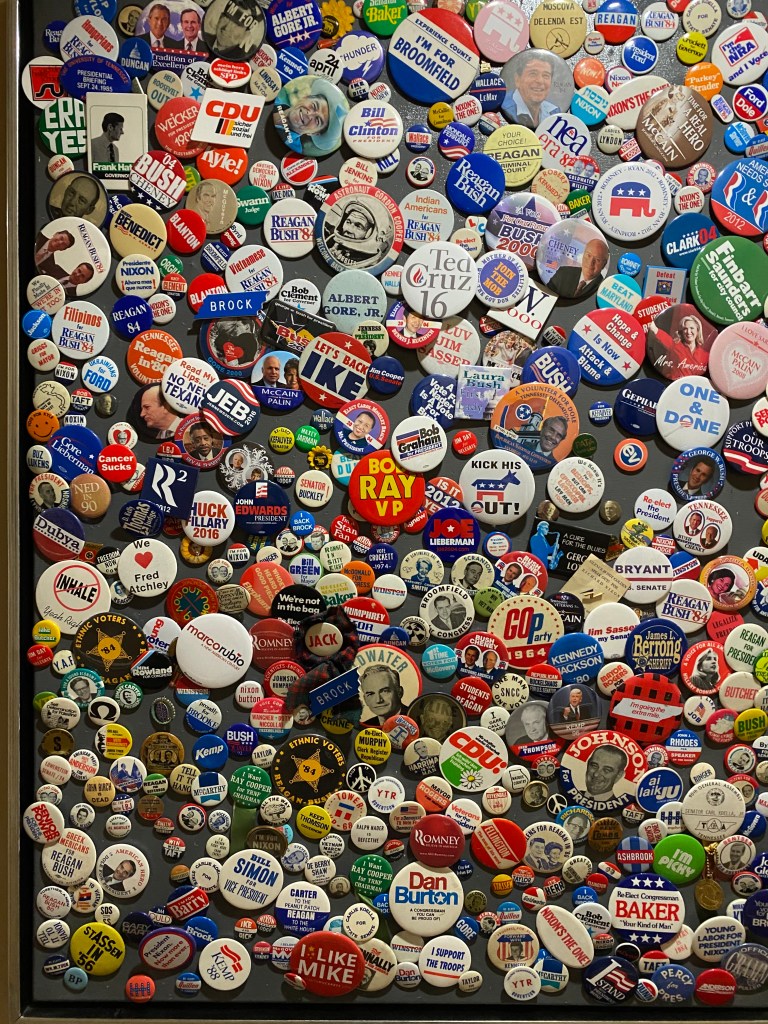
“Abraham Lincoln was the first president to use these items strategically as a campaign tool in the 1860 presidential election. However, the first mass produced and collectible buttons for a presidential campaign started with the McKinley vs Bryan race in 1896.”
Kathleen Moenster, nps.gov
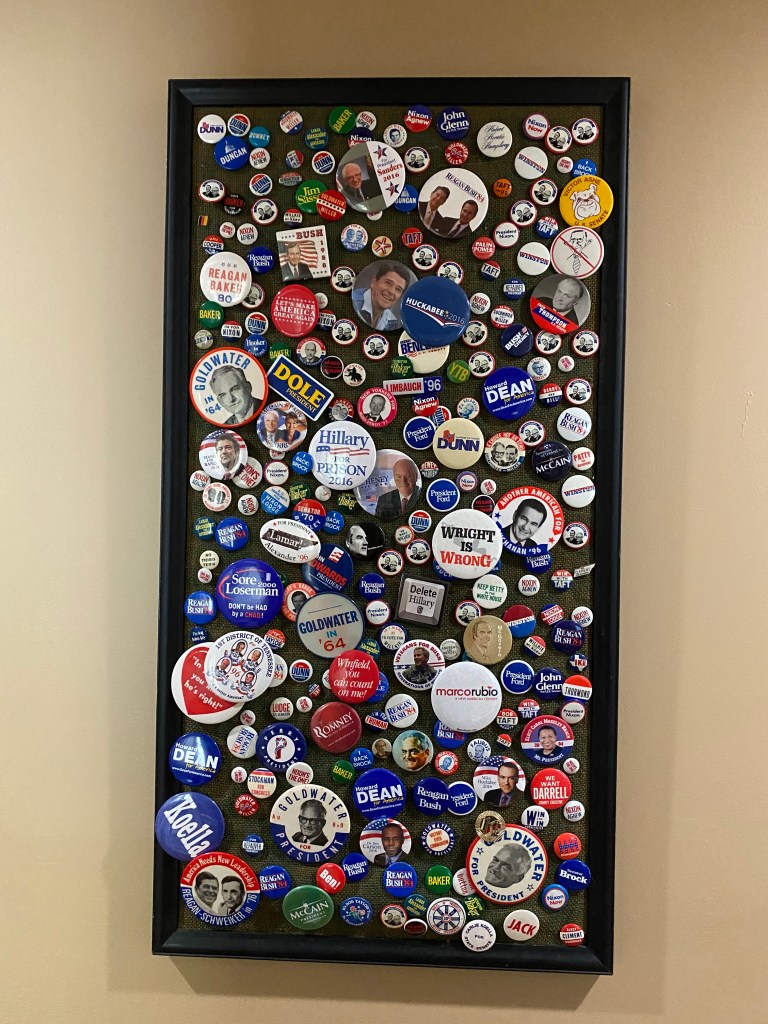
One man's trash is another man's treasure.
Start Here.
#1: Read your insurance policy.
Don’t roll your eyes, you’d be surprised how many people don’t read the fine print. If the terms rider and floater are new to you, definitely call your agent to decipher the lingo and make sure your collection is covered. Your homeowner’s policy covers your stuff to a certain extent, but collectibles, guns, furs, jewelry and art have additional coverage options that are well worth exploring and keeping the values up-to-date.
“Some policies limit coverage of non-household items to a maximum claim amount, usually $500 to $2,000.”
according to Investopedia
Which brings us to #2:
How do you measure its value?
You could. . .
Check recent auction selling prices and pricing guides.
Ask local antique and collectible dealers.
You should. . .
Make an appointment with a professional appraiser. Hourly rates typically run from $150 to $350, depending on experience and accreditation. Appraisers charge by the hour, the piece or total project — never a percentage of the value.
Keep receipts for newer items and any appraisal documents you might have. Appraisal documents may be necessary in order to process a claim and they are time-sensitive.
#3 Make a List, Finally
You may already have a gallery full of photos, or a dedicated Facebook page to your treasures, so you have a head start. Assemble your receipts, appraisals, photos and anything else relevant to the items in a file cabinet (ok), fireproof safe (better) or a bank deposit box (best). It’s like telling a fishing tale, your word won’t cut it without proof.




 Crossing T's and Dotting i's